

Egypt is a Perfume Shopping Paradise
By Nancy Lyon
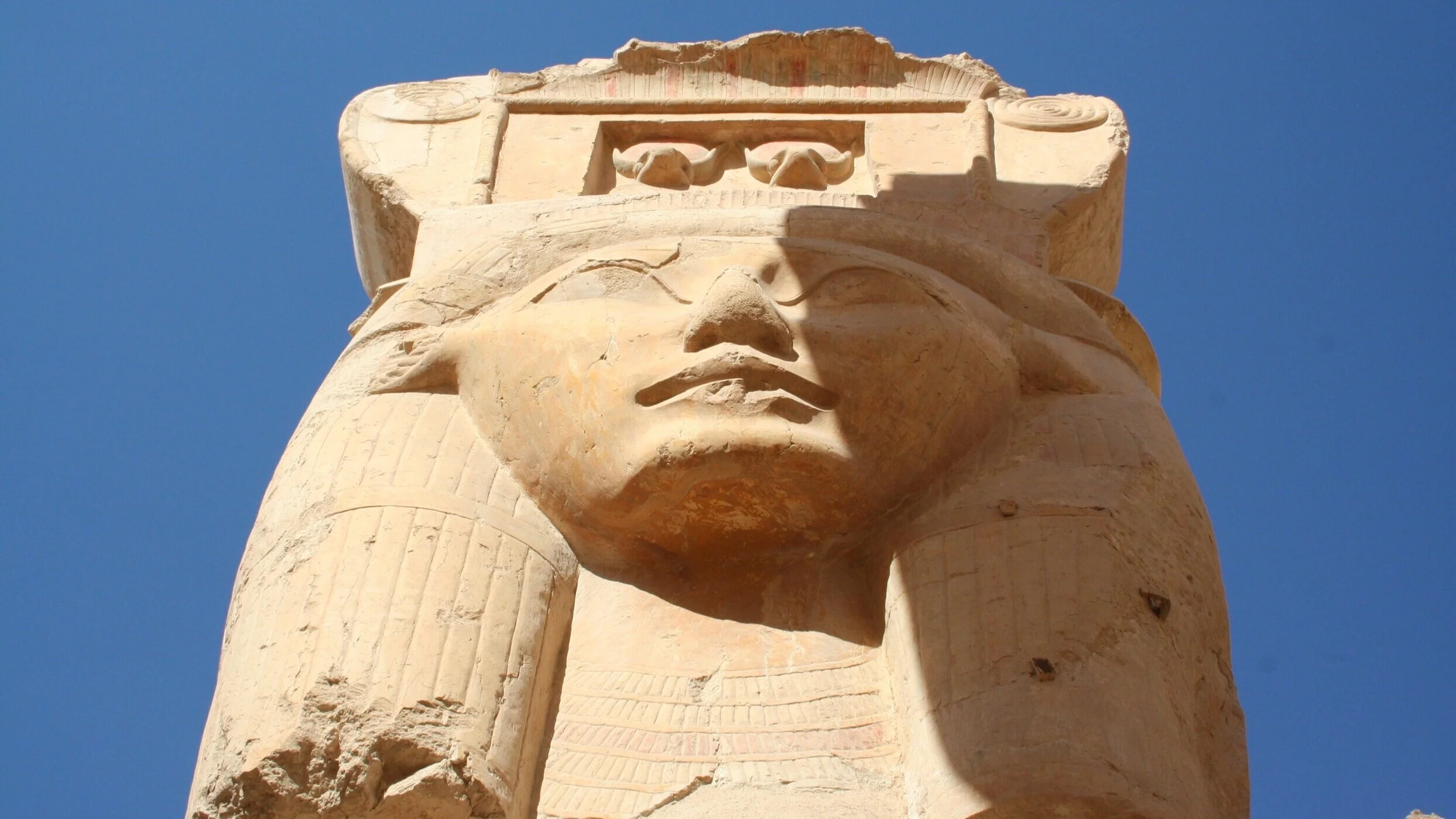
Temple to Queen Hatshepsut, Egypt’s Female Pharaoh, at Deir el-Bahr, EGYPT
“Scent of river, scent of sand, smell of cold starlight at the dawn of the world. This gift of the Nile—the land that became Egypt—is a trance weaver. Its dreamy dusty landscapes shadowed by gods and rulers and monuments too colossal to grasp make you feel that nothing is preposterous. Not the claim that the pink granite sarcophagus in the King’s Chamber of the Great Pyramid is really a spiritual portal for launching the Initiate into an out-of-body experience of the illusion of Death. Nor Edgar Cayce’s vision that deep under the right forepaw of the Sphinx lies a subterranean Hall of Records of human history from the first incarnations to the end of time. Nor the conjecture that the people of this fecund Mother Lode of Civilization visited North America during the Libyan XXII Dynasty of 800 B.C. with their priest The Star Watcher, travelling up the Mississippi—the Nile of North America—inspiring pyramidal earthworks and introducing Egyptian hieroglyphics to Canada’s MicMac and other native peoples. ”
Egypt can quickly overwhelm the senses. There’s the mind-crushing Pharonic, Coptic, Greek, Roman and Arabic histories and the intrigues of Egyptian dieties and pharoahs with sleep-haunting names. And Cairo’s garrulous “Symphony of Destruction” of 17 millions cars honking, donkeys farting, sheep bleating through the laneless clamour of traffic in Egypt’s iconic city. And at Giza—the sandstorm of Great Pyramid vendors blowing stuffed camels and camel rides at you in every language on the planet… or the miles of Arabic script coiling across Egyptian billboards and shaping the smokey plumes of millions of lit Egyptian cigarettes.
An urge to lose myself in aromatica overcame me outside Cairo, where life smells better and it's easier to ponder an ancient world driven by the nose, the Egyptian hieroglyph symbolising pleasure.
Eyes over-dazzled, ears deafened, palate sated with breakfast, lunch and dinner arrays of a thousand plates, touch numbed by the sensations of silks, papyrus, alabaster, polished camel bone jewelry, I have fallen under the spell of the Egyptian perfume god Nefertum.
From Saqqara to Edfu to Kom Ombo, Karnak and all the through the Valley of the Kings, I’ve been mesmerized by temple carvings and paintings celebrating the Egyptian devotion to beauty. Gazing upon divinities, pharoahs and queens, dancers and musicians being annointed with sacred oils and erotic perfumes, I want to lose myself in aromatica.
If these perfumed unguent cones adorned with Lotus flowers could melt again on the heads of these wigged beauties with the feline eyes, sinuous bee-stung mouths and melon breasts popping through diaphanous linen tunics, we’d be knocked dead by Susinum—scent of lilies, myrrh and cinnamon, or Stakte, Kyphi, Tiryac, Khoiak, Cyprinum and the Mendesian, the renowned scents of Egypt.
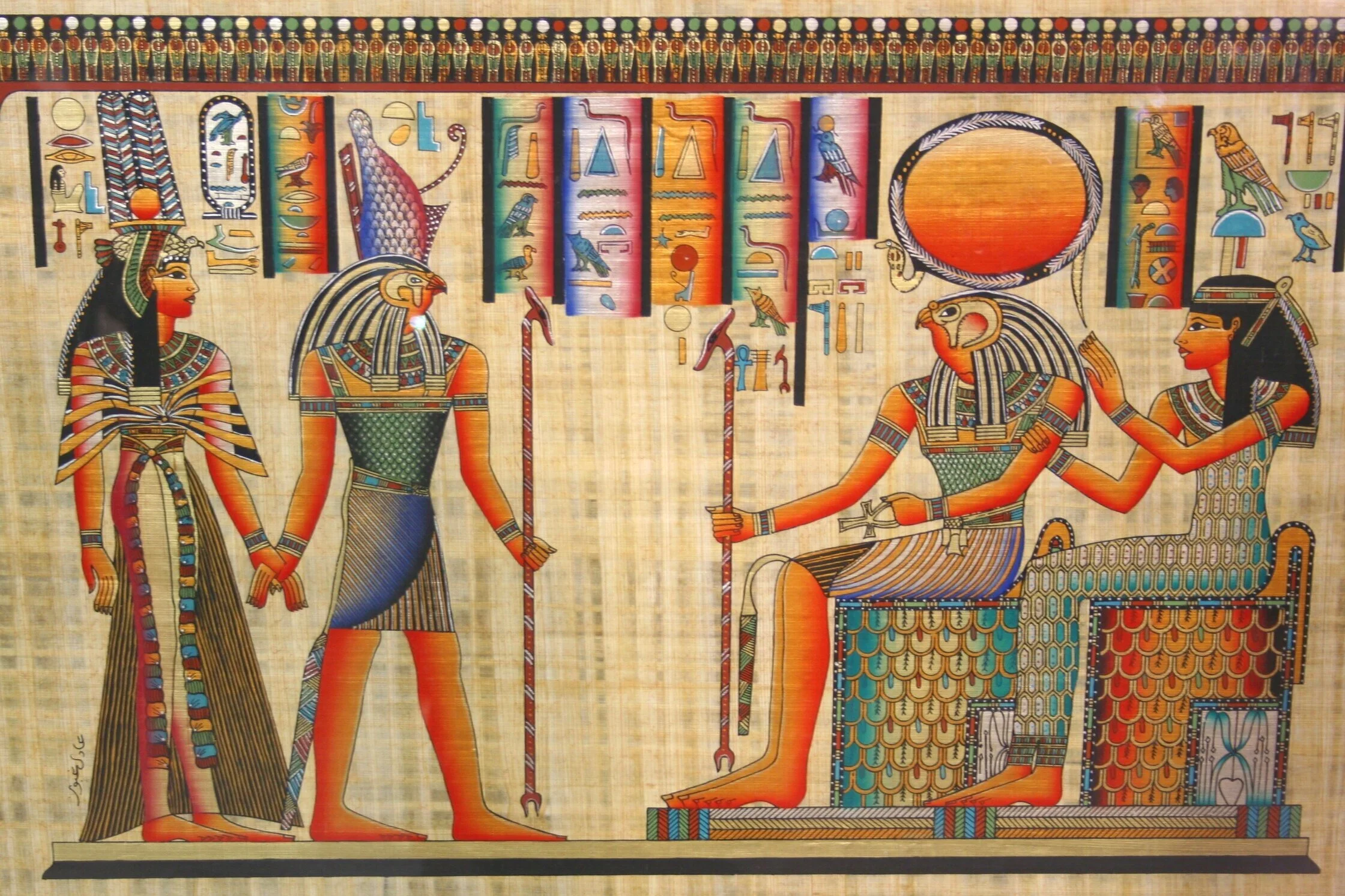
It’s likely that some people were knocked dead over these ancient Egyptian perfumes, which were said to spring from the eyes and bones of the gods and to nourish them. Edfu temple walls are carved with lists of aromatic resins. The pyramid of Unas at Saqqara contains spells and incantations using unguent and incense, and Queen Hatshepsut, Egypt’s only female pharoah, is shown leading an incense expedition to the Land of Punt (Somalia).
Ancient Egyptians mastered the olfactory arts, creating unique scents for worship, lovemaking and rebirth with secret rituals in hidden temple chambers. Just how potent Egyptian perfumes were dazzled the world in November of 1922 when British Egyptologist Howard Carter opened King Tut's tomb and was hit by clouds of Spikenard unguent (from the Nardostachys root of faraway Himalayas) sealed away there for 3,300 years.
If a scent could retain its power for three millenia, what else could it do?
Egypt’s only female pharaohThe Egyptian Pharoah’s name “Hatshepsut!!!” smacks the ears more like a sneeze than an orgasm. Yet if I am to believe my vehement Egyptian dragowoman (guide) here at Deir el-Bahr, “Hatshepsut!” is what the king of gods Amun cried to Queen Ahmose in the throes of his ecstacy with her. And so Egypt's only female pharoah—Hatshepsut, the daughter of Amun and Ahhose, was named after Amun's orgasm.
Hatshepsut ruled between 1473-1458 B.C., and the story of her divine origins says more to me about this bearded lady's lust for perfume than sex and seduction in ancient Egypt.
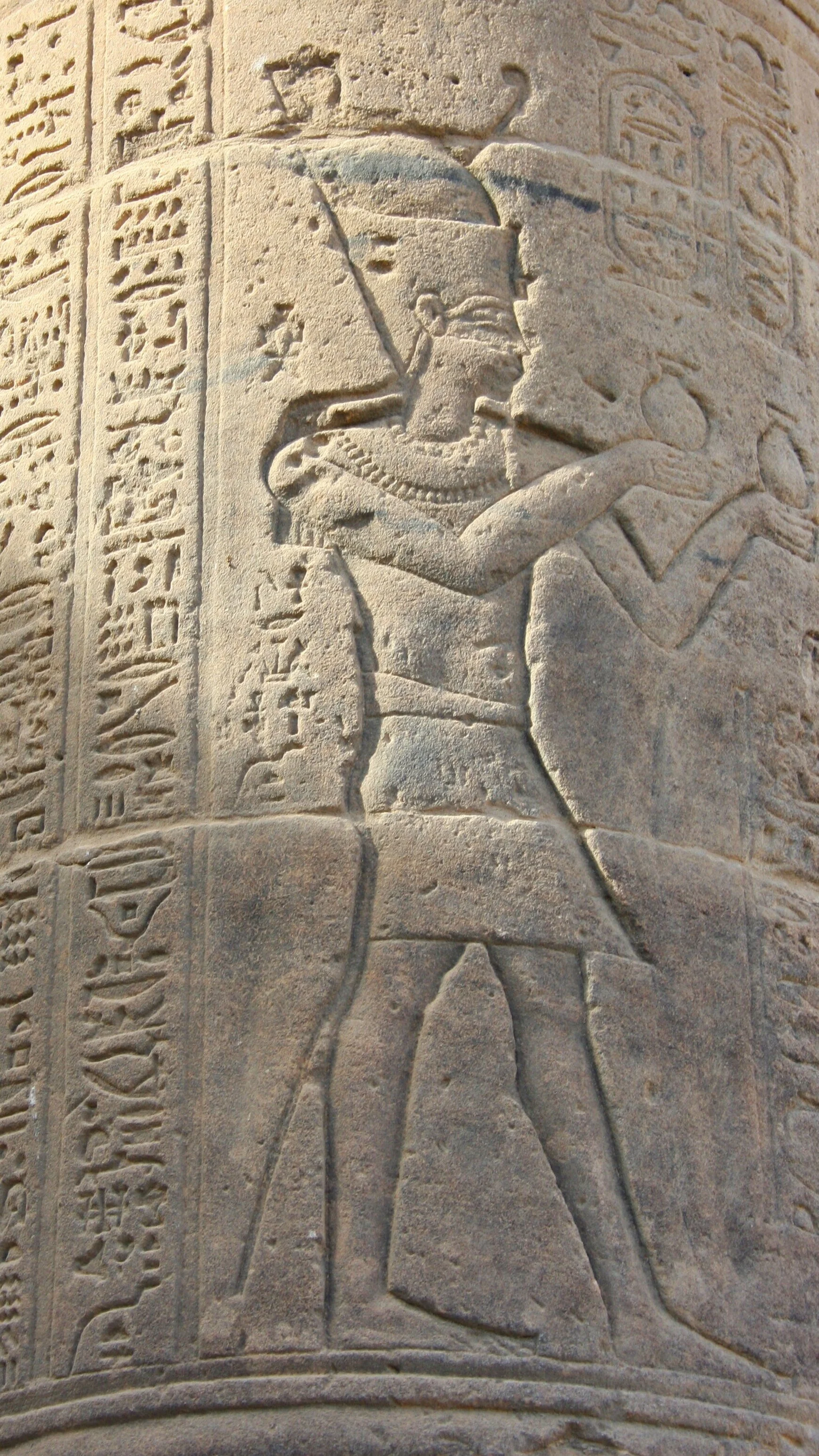
Egyptian carrying perfume carving at Deir el-Bahr
Egyptians believed that perfumes sprang from the very eyes and bones of gods and nourished them. To justify Hatshepsut's claim to the throne and indulge her perfume habit, she cleverly engaged the priests to legitimize the aromatic version of her conception.
You see it carved on the colonades of her fabulous terraced mortuary temple at Deir el-Bahr, anciently known as Djeser-djeseru, “Sacred of Sacreds.” Here Amun, disguised as the queen's husband Tuthmosis I, approaches the queen's bedchamber, and his electrifying scent and pleasing erection arouse the queen. After exclaiming “Hatshepsut!” (ancient Egyptian for “WOW!”?) Amun reveals his divinity and the name of their daughter: Hatshepsut.
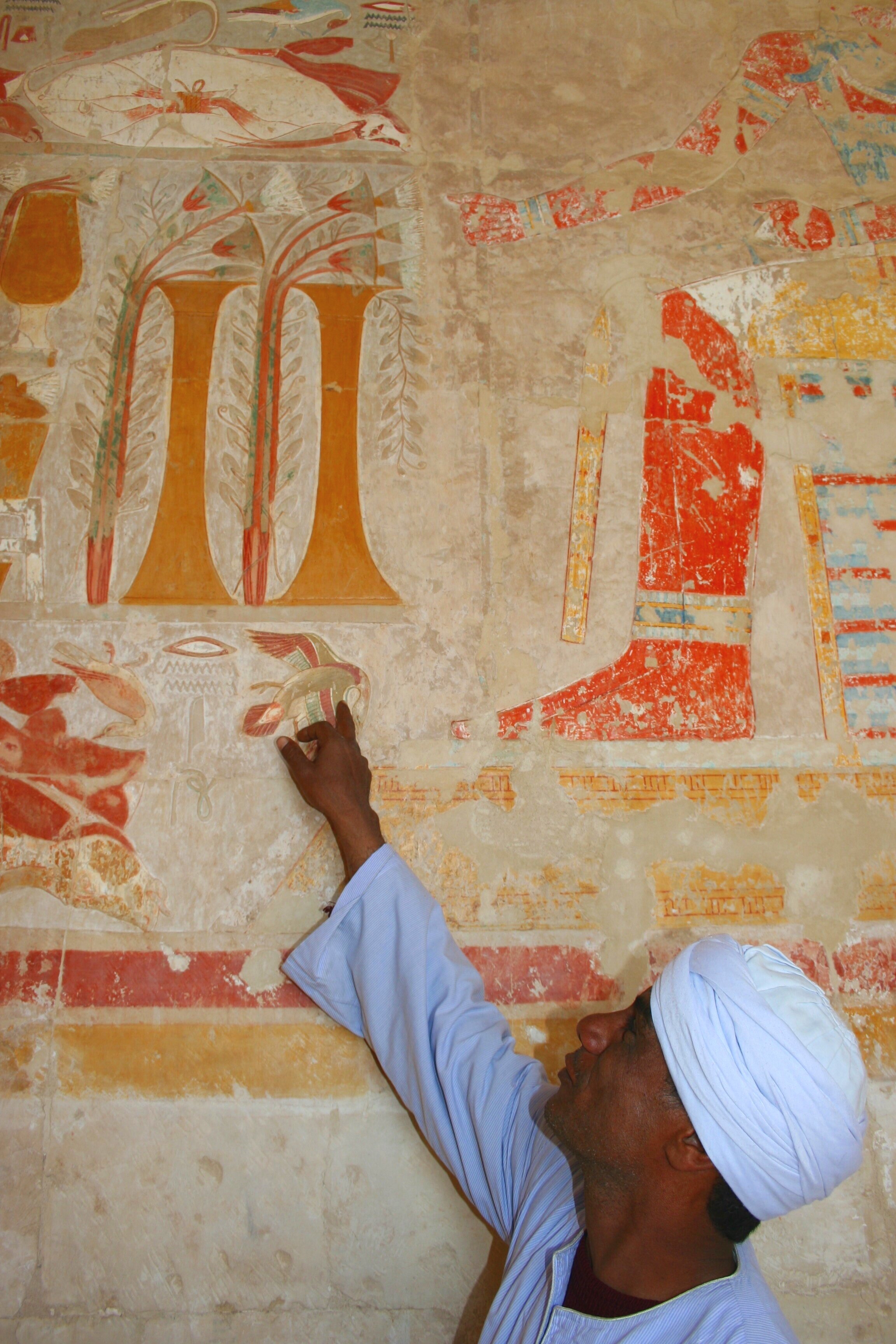
Guide at the temple to Queen Hatshepsut, at Deir el-Bahr, EGYPT
Clever Hatshepsut, who adopted the royal false beard and depicted herself as a male, popularized perfumery with grand expeditions to the land of Punt to honor her “father.” Her loaded ships sailing up the Red Sea from likely Somalia are painted on these walls. But I yearn to smell that cargo of gum resins and baskets of Boswellia sacra and Commiphora myrrha trees dripping divine frankincence and myrrh, and the scent-drenched wind from her magic garden of incense trees.
Nefertum, Egypt's virile perfume god
As you can see, I've fallen under the spell of Nefertum, Egypt's virile perfume god. Yes, an urge to lose myself in aromatica overcame me outside Cairo, where life smells better and it's easier to ponder an ancient world driven by the nose, the hieroglyph symbolising pleasure.
Imagine citizens being commanded to annoint themselves with perfume once a week. Imagine Julius Caesar tossing bottles of Egyptian perfume to the Roman crowds to celebrate his mastery over Egypt. Imagine Marcus Antonius' love swoon when Cleopatra VII wafts up the River Kydnus into Tarsus on a gilded barge with purple sails perfumed with jasmine!!! Lavish indeed when it takes 8,000 jasmine flowers to make only 1/25 of an ounce of jasmine absolut.
Don't you wonder, was it Cleopatra or her perfumes that changed the course of history here?
We know how perfume inspires lovemaking in this life, but the Egyptians deemed perfume necessary for rebirth in the Afterlife. So we find temples to Horus at Edfu carved with ingredients for the precious Kyphi: roots of Acorus and Andropogon macerated with honey, wine, cypress, grapes, broom, calamus, myrrh, stoenanthe, saxifrage, saffron, juniper, cardamom, and patience.
If only I could slip through the walls of time and join in the festivities, with an unguent cone on my head. Like with these wigged feline-eyed beauties with sinuous bee-stung mouths and melon breasts, the ambrosia would melt down my face and onto my shoulders, staining my diaphanous linen tunic and knocking me out with Susinum or Stakte, Tiryac, Khoiak, Cyprinum and the Mendesian, the renowned scents of Egypt.
Aswan outdoor market haggle frenzyAswan’s dusty glittering Sharia as-Souq is but one place to buy perfume oils in Egypt. This outdoor market is a page out of the Arabian Nights, odorifous with goatskin, cigarettes, pungent herbs and ground spices. But if you don’t know the Arabic “La, la” (“No, no!) and “Bass kifaaya” (“Leave me alone”) you could, like me, succumb to piles of beaded scarves, papyrus paintings, camel bone necklaces, galabiyyas, Nefertiti heads, alabaster scarabs, not to mention a blue Anubis and Bastet cat statue haggled under the broken nose of the Sphinx, before ever getting to the perfumes. Making eye contact with sellers of copper pots, belly dance costumes, carpets or camel saddles is to be avoided.

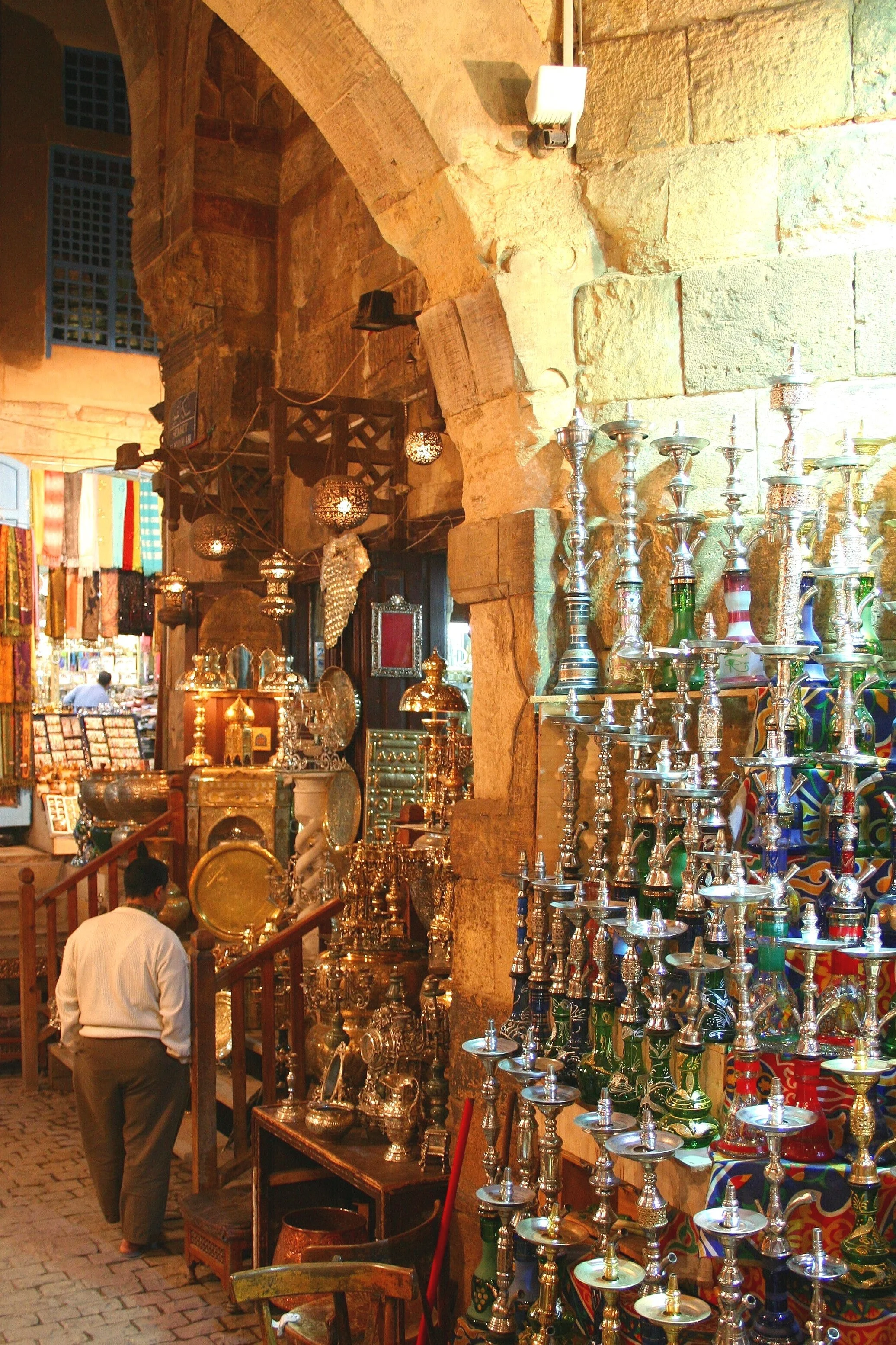
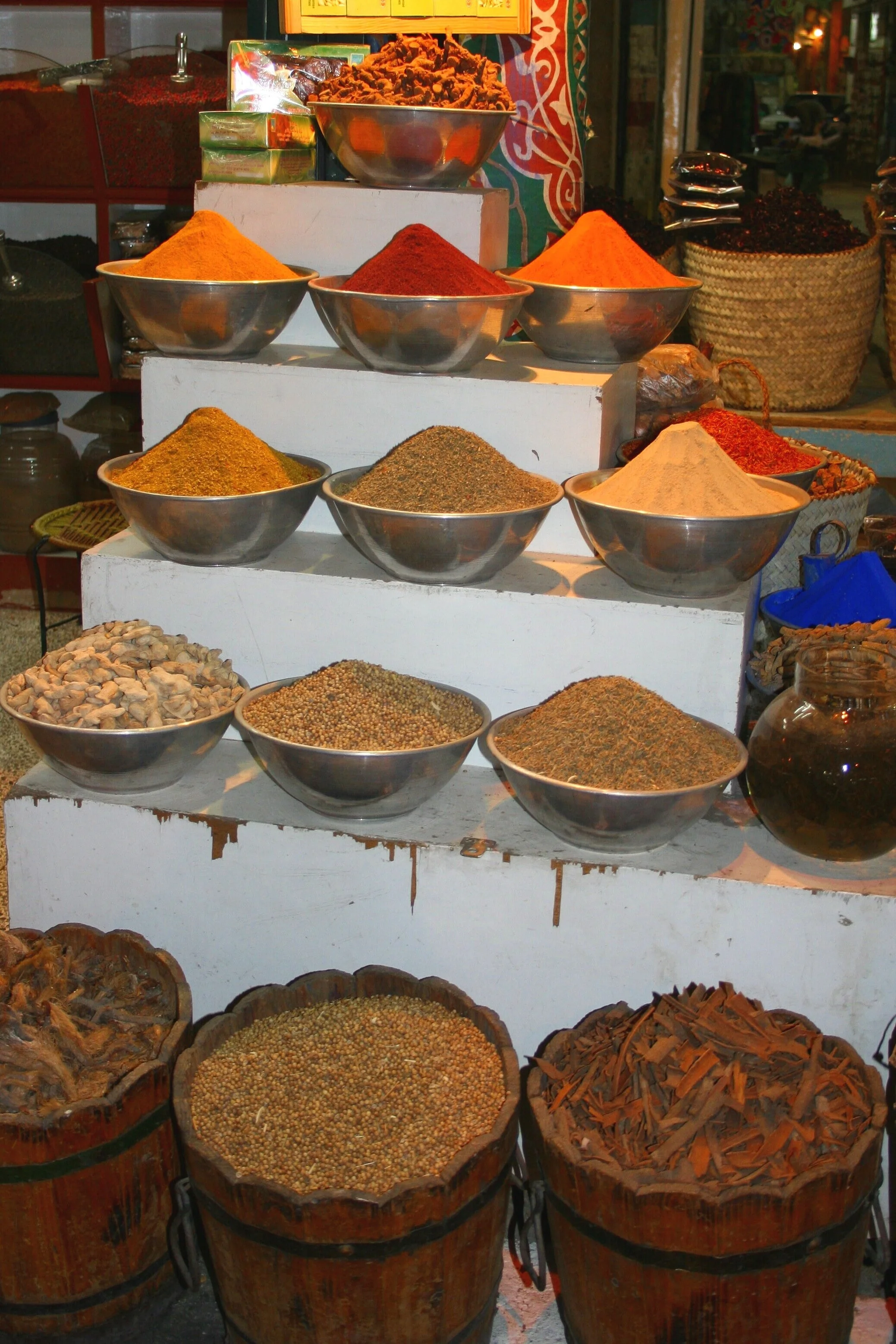
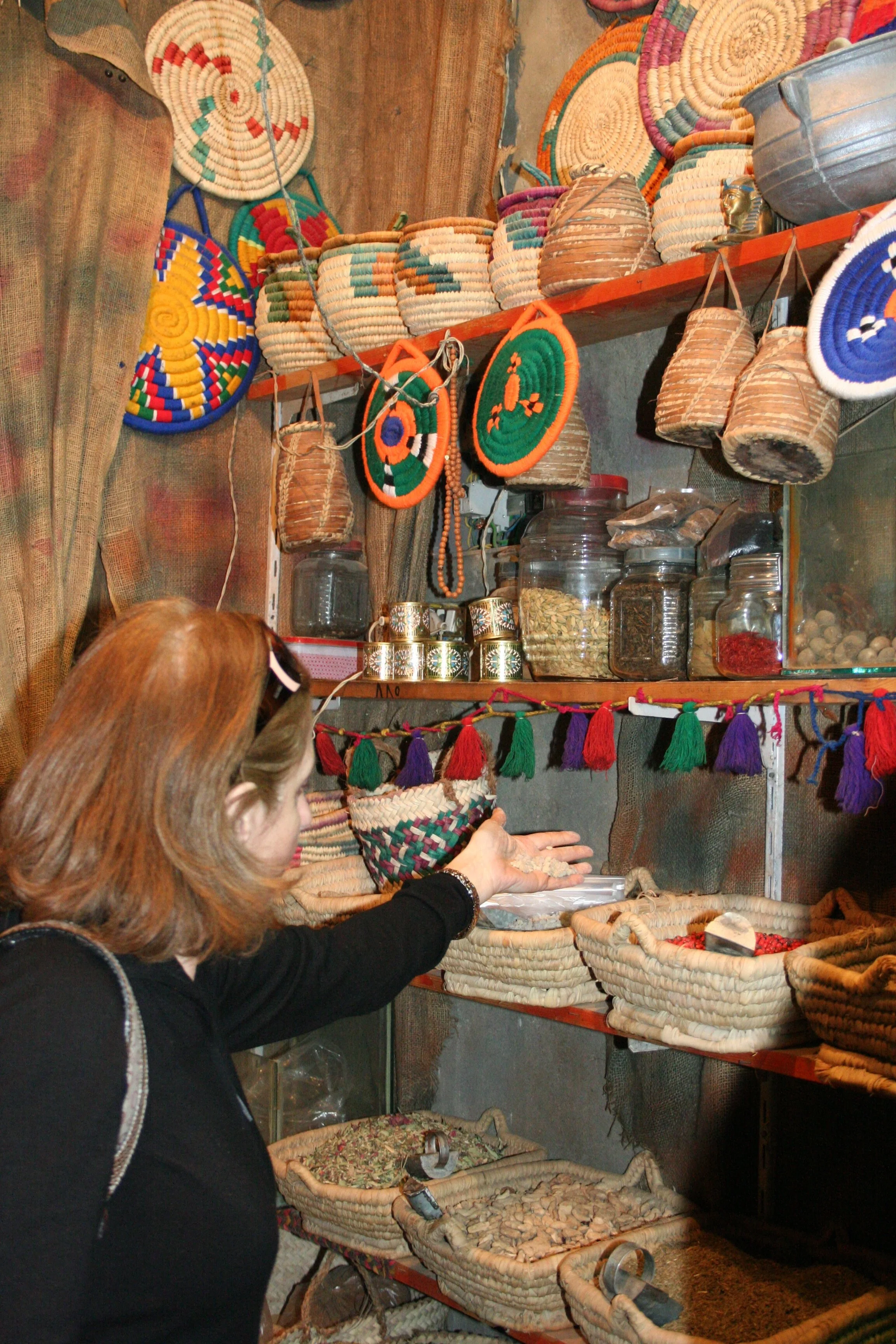

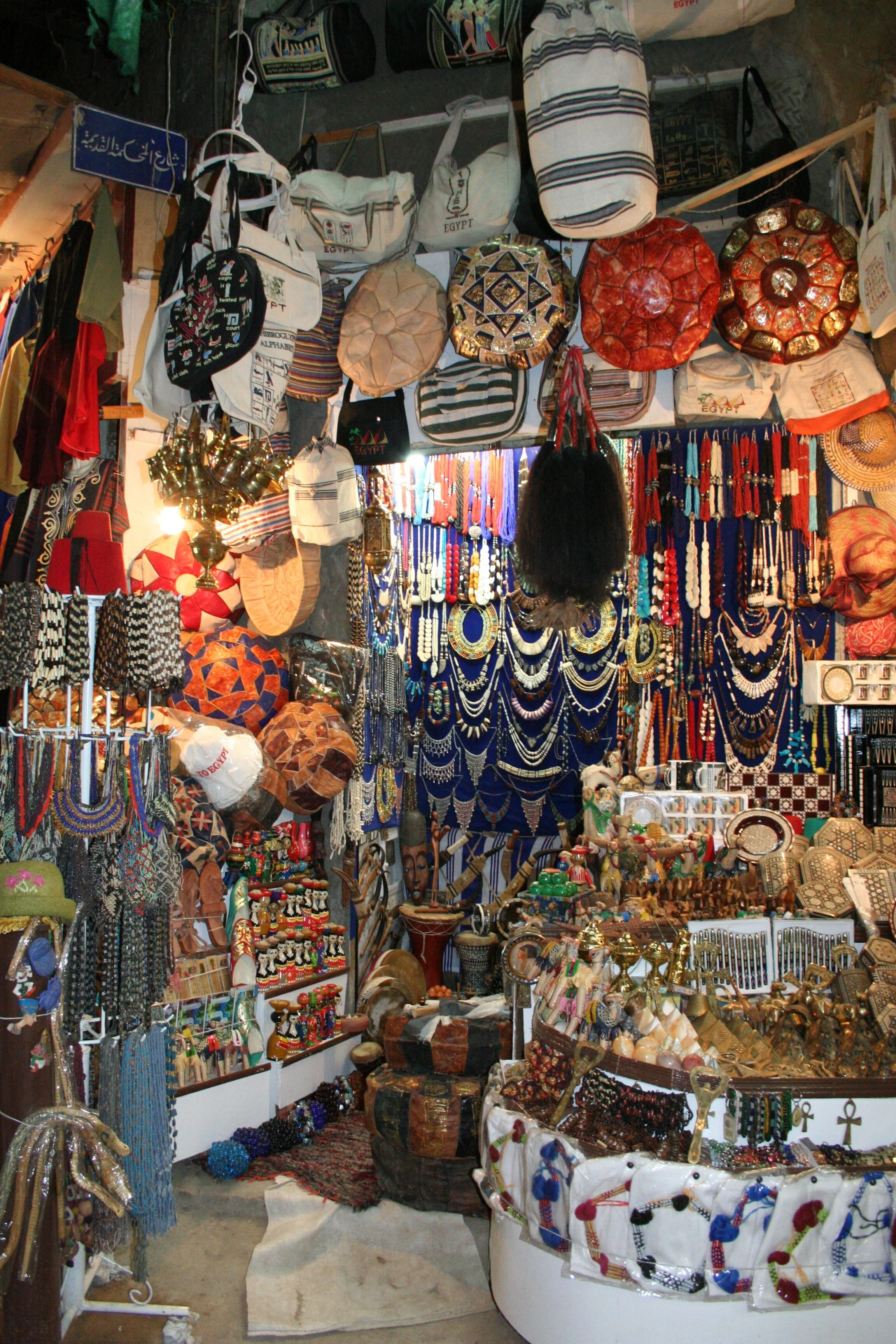
“La la, no statues, want perfume,” I shout here and there until I feel myself being pulled through a loom of alleys reeking of goatskin and camel leather, hissing brasiers, burbling Shesha waterpipes, steaming mint tea, giant orange pyramids of powdery cumin and tumeric and pulled into an iniquitous den of glowing bottles labeled in Arabic. Ooooh the stupor of perfumes!!!
“Only Egyptian pound for one milliliter!” they cheer. That's great but the smallest bottle is 100 ml, and I want lotsa bottles. The hilarious haggling arts require offering half of what’s asked, then walking away.
But how do you negotiate a whirling dervish of scents thrust at your nose and daubed all over? One wrist is Frankincense, another Cleo, and my neck Ramses’ Delight and like no tea ceremony or wine tasting, this is antic and frantic. While they are mummifying my bottles of Amun-Raa and Queen Hatshepsut in cello-tape for the long journey back to Canada, as from a Genie’s lamp appears gorgeous blonde Bea, one of my Canadian travelling companions.
Lured to this shop by the same tout, Bea gets wrist-daubed with Attar of Roses and Black Narcissus, then is asked if she would like Scent of Arabia on her knee. (Her knee?) While it is true that Egyptians reserved different scents for different parts of the body, I suspect a coy ploy to see une jambe de touriste. The following evening at the Royal Palace for Perfumes, nobody asked to place any perfume samples anywhere but on our fingers—and each of our ten fingers had a different scent.

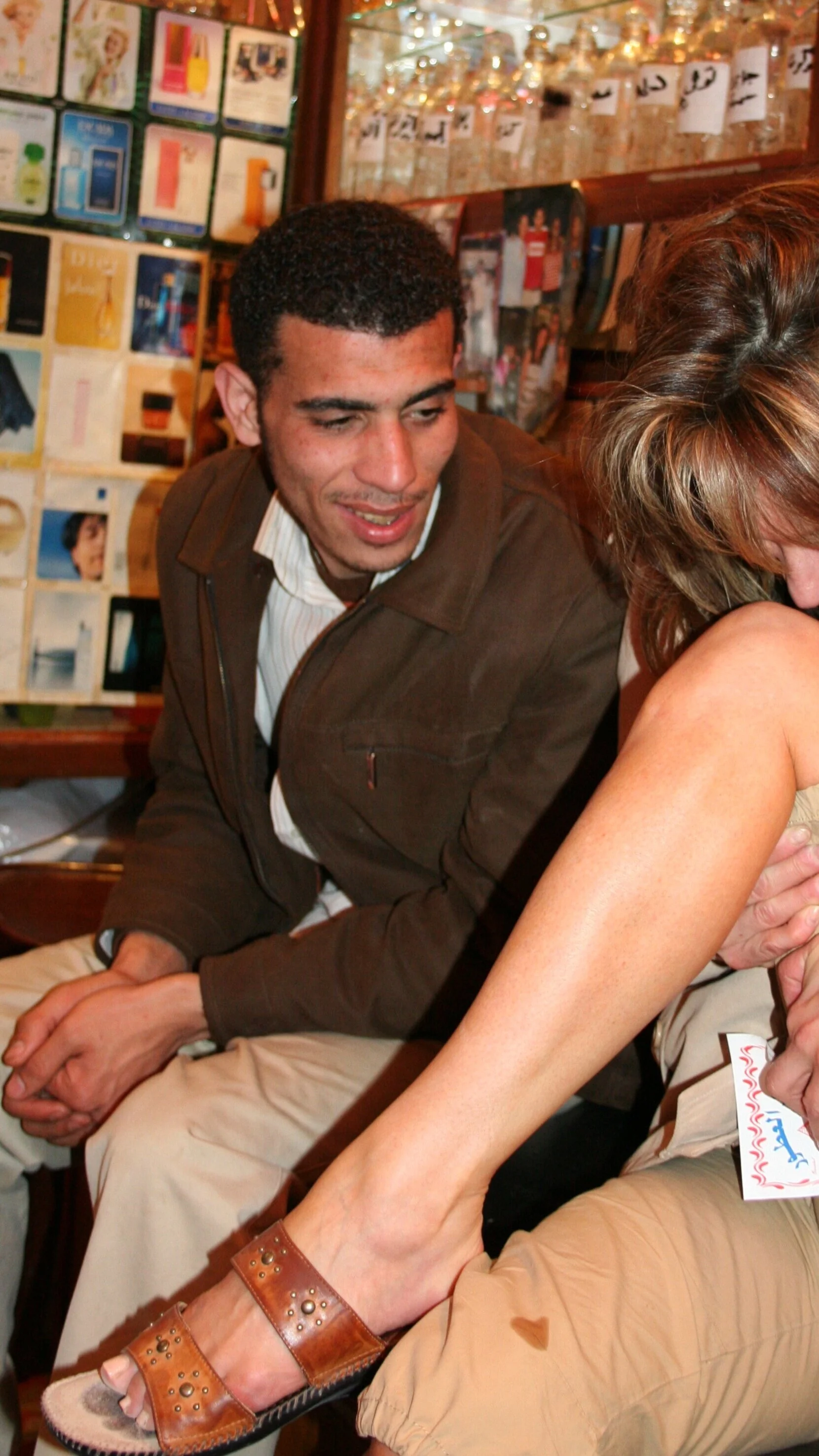
Testing perfume scents in Egypt
Royal Palace for Perfumes
The Royal Palace is not a palace, but a bleak factory building on the dusty El Sadat Street in Aswan. Except for the servings of mint tea, this hard-sell feels more industrial than exotic.
We're subjected to “the flame test” to lure us to buy. A volunteer holds an open perfume bottle under a lit cigarette lighter to prove that the perfume has absolutely no alcohol. It is simply pressed flower essence which is dripped into a bottle and stored underground for six months. I sniff everything from Tut-Ankh-Amun to Omar Khayyam, to Amun-Ra, Chypre, and Aida the calming Lotus, and then intoxicating Sandalwood oil. I’m delighted to learn that three drops blended with milk and honey will magically remove the dark circles from my eyes. And after going sleepless in Egypt for 10 days, I have circles.
But then our loud gesticulating Muslim saleswoman singles me out and vows that Secret of the Desert will make my man go like an Arabian stallion for three full hours.
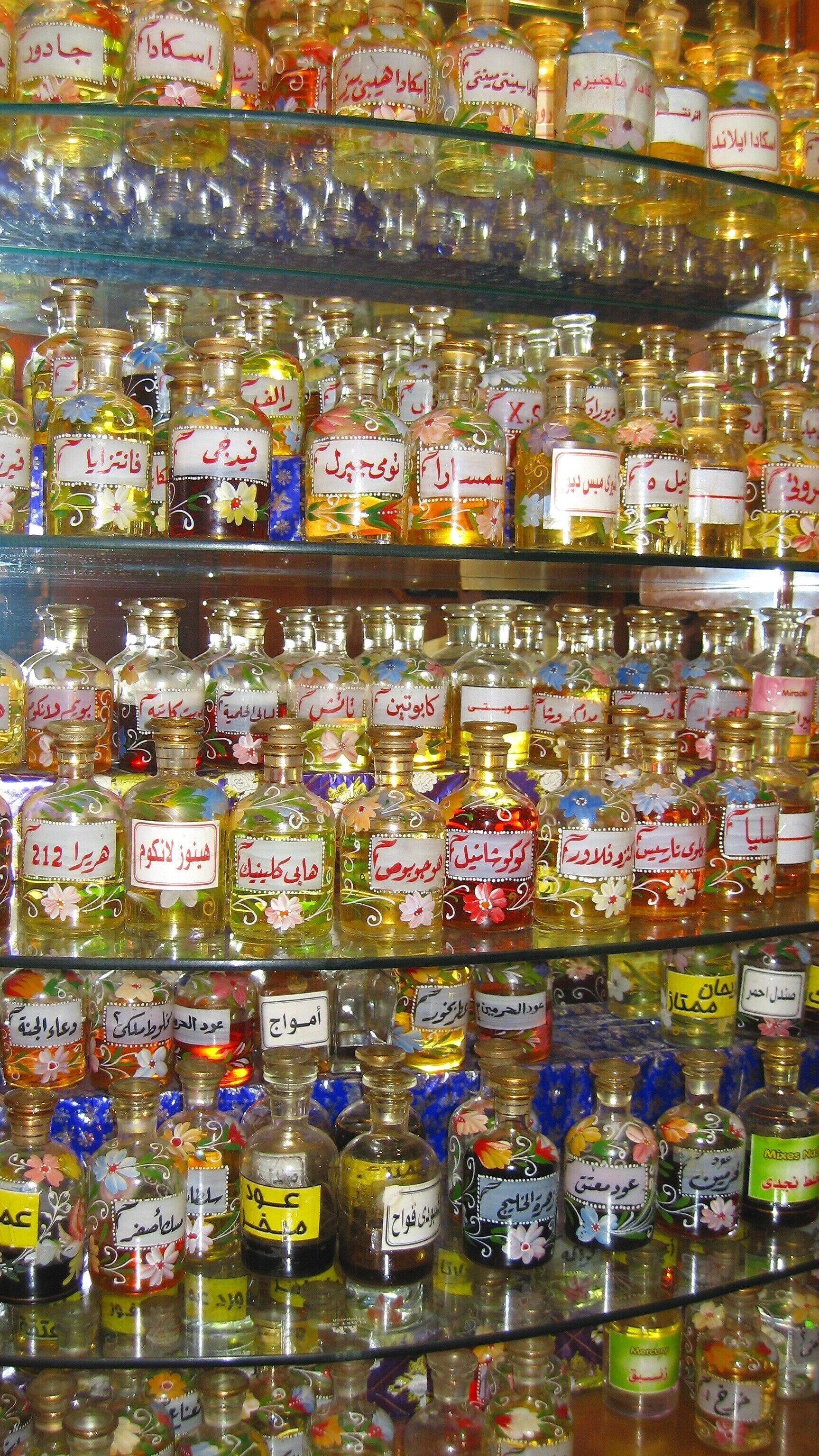
Bottles of Egyptian perfume by the thousands
Hatshepsut!!!!
Flying back to Canada over the Atlantic in my solar boat, I'm bitten by an odd loneliness for all the people I met on the Egyptian temple walls. I peered so intimately into their lives and loves, captured on stone, yet they know nothing of mine. My Egyptian sequel shall be a perfume expedition as carefully planned as Hatshepsut's.
Maybe a jjin could stuff 5,000 years of Egyptian history into a magazine article. Not I. But if I could trap my precious Egyptian moments by enfleurage and sniff at them for the rest of my life, Sahara Stardust would evoke my night camping under a starry dome over the White Desert, carpeted with 70-million year old sea fossils. Bedouin Silver Song would lull me again with the love songs our driver sung as we tore over the Saharan sands.
Nubian Nights would float again me under a wavy Nile crescent moon. Lure of Letopolis, a musky leonine scent, would conjure the powerful limbs of the Sphinx. And Temple Bells would capture all the glitter and glam of those gorgeous Egyptian musician girls. As for Cairo, what perfume cover the odors of Umm al-Dunya, the Mother of the World's deisels, donkeys and dust? Leave that to the god Nefertum.