
My Perfect Day in Montreal



“A shortcut to China. That’s what French explorer René-Robert Cavelier was looking for when he sailed west across the Atlantic from France in 1668 — and came smack against the treacherous rapids of the Saint Lawrence River. Today tourists to Montreal can brave a drenching jetboat ride over these same rapids where poor old Louis Jolliet lost all his journals and maps of his 1673 Mississippi River expedition when his canoe overturned.Montrealers still joke about Cavelier’s misguided voyage to China. What he thought was “La Chine”, was the island of Montreal—and the whole North American continent.
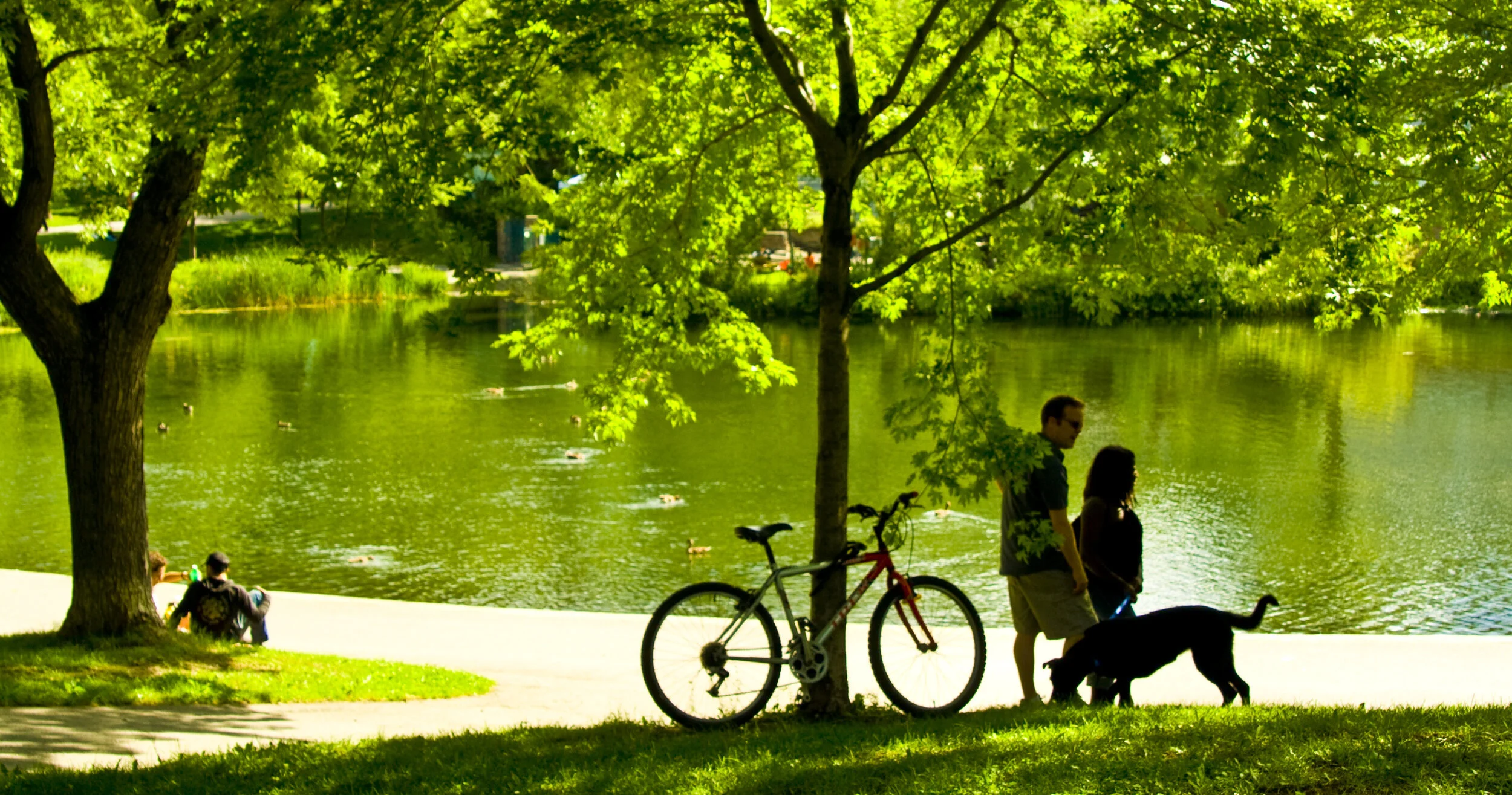
To mock Cavelier’s dream passage to China, his royal land grant was named “La Chine.” The canal built in 1825 to bypass those the deadly Lachine rapids got named The Lachine Canal. Today it provides the setting for Montreal’s most wonderful bike path.
History is often ironic. If Cavelier were to discover Montreal today, he’d hear Chinese (and 80 other languages), see Chinese Dragon Boats, apothecary shops selling snake powers and ground deer antlers, and Chinatown restaurants with “Biscuits d’horoscope” - fortune cookies with bilingual French-English fortunes.
When Jacques Cartier arrived in 1535, there was only a palisaded village of 50 Iroquois long houses called Hochelaga. Village Chief Agouhanna took him to the summit of the island’s 764-foot high hill to show off the view, and the French explorer promptly claimed the island for King Francis and named its petite mountain Mont Réal.
Now Jacques Cartier’s Mount Royal, affectionately called “La Montagne,” is a lush park landscaped by Frederick Law Olmstead in 1874. And Cartier’s name spans everything from an animated cobblestone square in Old Montreal to a “Jacques Cartier Hot Doggeria” on Sainte-Catherine Street.”
-
Description text goes here
-
Description text goes here
-
Description text goes here
-
Item description
-
Item description
-
Item description
-
Item description
-
Item description
-
Item description
-
Item description
-
Item description
-
Item description
French pizazz without the crowds
Montreal: Ville d'Amour. City of two-cheeked kisses. City of jazzy night owls, adventurous gourmets—and f e s t i v a l s !!! International festivals of fireworks and films, jazz and comedy, kite flying and hot air balloons. Medieval Pageantry. Québécois music. Fringe theatre. French pop songs. Caribbean Salsa. Hardly a subdued place. Hardly what Jeanne Mance and Paul de Chomedey envisioned when they sailed here from France in 1642 to tame the pagan natives with Christianity. Ville-Marie, the Catholic mission they founded in 1642, boomed into a fur trading post, then into a spirited industrial capital with a bustling port and then a rambunctious post-war city with a grand destiny.
Although Montreal is still lousy with saints—at least its street names—and so many churches that Mark Twain complained he couldn't throw a brick without breaking a stained glass window, Ville-Marie now fulfills its sacred function as a glitzy shopping complex, and The Paris of the North—the world's second largest French-speaking city—shoots off cultural fireworks all year long.
Forgive me for getting carried away, but this weary old world needs more Romance. Come to Montreal for some French pizazz without the crowds. Thinking back to that exhibition Picasso Erotique - of 350 of the lusty Spaniard's censored works - which made its only North American appearance at the Musée des Beaux Arts, I'm wondering how Picasso would have painted this saucy ville français that flaunts puckered red lips as its official tourist logo... I imagine wild brush strokes - globs of carmine and black - for two svelte nocturnal dark-lidded tangueros (tango dancers) with pouty lips and zig-zag eyebrows, contorted in a torrid, traffic-stopping dawn abrazo on the Boulevard St. Laurent. Because in Montreal, despite all the ARRET traffic signs, you must display passion.
I imagine a canvas of Montreal's outdoor wrought-iron staircases spiralling like a surreal tornado through a methyl-blue sky, picking up bits of the hip Plateau Montreal in its path - to finally coverge on a huge firework-lit balcony laden with soufflés and farandoles and tapenades, and flowing with champagne and cloudberry liqueur and fiesty ales and lagers labeled with images of devils and flying canoes...and hundreds of lips and teeth kissing and eating and laughing. Because Montrealers love to hang outdoors and eat and drink and talk and kiss. Ahh, but Picasso couldn't paint bi-lingual love...murmured in broken English and broken French...nor the odour of river-scented wind along the Lachine Canal. No, for this you must come here. En été.
Montreal's world-celebrated chefs have over 5,000 restaurants in which to strut their stuff - And cyclists have over 400 miles of bike paths on which to work off those calories! It's amazing how far you can go around Montreal and its archipelago on a bicycle. Every June 30,000 cyclists join the world's largest cycling event, the Tour de l'Ile around the island of Montreal.
Breakfast: As an ex-New Yorker who has enjoyed thousands of Gotham's fat and chewy bagels, I concur that the sweeter, thinner, crustier Montreal bagels are even better. You can grab them hot out of the wood-fired oven, at the Fairmount Bagel Bakery, but you won't get a view of the Old Port to go with it.
In this town of countlessrestaurants, bistros and cafes, hundreds of atmospheric venues beckon you to café-au-lait. But I head out on the Lachine Bicycle Path to Old Montreal and choose a café-terrace with Bordeaux red umbrellas on the wide Rue de la Commune for a front row seat on the Old Port .
Morning
The lazy clop of horse-drawn caléches, seagulls on the wing, quais bulging with seaway lakers and luxury cruise ships, and three and a half centuries of history. Old photos in the McCord Museum archives show Montreal's Vieux Port thick with the masts of tall sailing ships. Now the flower sellers and portrait artists have taken over the Place Jacques-Cartier.
Soon tourists will descend upon the old cobbles and fan out in all directions. They will explore the Pointe-a-Calliére Museum of Archaeology and History, built over the city's first Catholic cemetery and gape at the gilt ceilings in the Gothic Revival Notre Dame Basilica...and climb the 192 steps of the Merchant Marine Clock Tower to gaze down on toy ships and ants on rollerblades on the promenade below.
And perhaps they'll brave a drenching jetboat ride over the treacherous Lachine Rapids, where poor old Louis Jolliet lost all his journals and maps of his 1673 Mississippi River expedition when his canoe overturned. And certainly these tourists will shop-shop-shop! for Amerindian dream-catchers and Inuit soapstone carvings along Rue Saint Paul, and for unusual Quebec-made crafts and fashions in the silver-domed Marché Bonsecours.
There's so much to see and do in Old Montreal, but this morning I've come for the ambience and to gawk at The Magician's Garden with its amazing 30-foot tall creatures and creations sculpted from live foliage and flowers for Mosaicultures Internationales. The Parc des Ecluses on the Lachine Canal is a green wonderland of leafy elephants, pandas, totem poles and Chinese dragons, and I am Alice. It's a WOW of a show.
I'm heading west on the Lachine bicycle path. I won't cycle the full 12km to the Lac Saint Louise waterfront and the amazing outdoor sculpture museum, but to the Atwater Market to buy some picnic fixings. a distinctly European flavor. raw-milk cheeses, crusty baguettes; buttery, sweet maple pies; and, )
The 20-minute ride hugs the historic old Lachine Canal which opened in 1825 to circumvent the dangerous rapids. It winds past abandoned grain towers with their ghostly, gritty beauty and factories converted into techno-chic lofts for artists and multi-media producers. At the Maison des Cyclistes on the Rachel bike path at the corner of Brébeuf, where I pump up my tyres and caffeinate my body at the Café Bicicletta, you can pick up maps of all the city's bike paths.
The Art Deco-inspired Atwater Market which opened in 1933 along the Lachine Canal has two outdoor promenades and dozens of shops. In summer you can find it with your eyes closed. Bunches of fresh dill and tarragon, earthy leeks and pungent raw-milk cheeses-gooey camemberts and stinky goat fromages named after every saint in Quebec and banned in the U.S. Then there are the succulent grapes, slippery Kalamatas, voluptuous breads and patés and rich microbrewed beers whose labels recount the whole history and folklore of Quebec. La canot volante —the devil-enchanted flying Rabaska canoe, and all the rest.
Remembering my small knapsack and the 40-min cycle to the Montreal Botanical Garden, I restrain myself! I'll soon be picnicking among bonsais, penjings, bromeliads and birdsong.
Après midi —Afternoon:
Cycling east on Rue Rachel through the Plateau Montréal, voted one of the hippest neighbourhoods in North America, I pass colorful boulangeries and créperies, confiseries, fruiteries and patisseries, and then am struck—always as if for the first time—by the bizarre silhouette of the world's tallest inclined tower. Montrealers budget-busting Olympic Stadium Tower has been the butt of public jokes—a disk-domed tower which looks like a mother ship from Orion. Its summit offers a panorama of the Monteregian hills and Adirondack Mountains, of the Botanical Garden's sprawling kingdom of green below, and the quartier called Hochelaga-Maisonneuve. A short cycle from the Atwater Market, this neighborhood, once the "Shoe-making Capital of the World" is now celebrated as Canada's Beaux Arts architectural treasure with its Cinéma Granada, Théatre Denise-Pelletier, and grand Marché Maisonneuve.
Montreal's Botanical Garden is the second largest in the world after London's Kew Gardens. You can't see all its exhibition greenhouses and 30 themed gardens in one day. Let alone all the wonders at the adjacent Biodome with four of the world's ecosystems-- plants, animals- from lizards to penguins and all under one roof. And there is the unique Montreal Insectarium - where once at a gala insect tasting, I squeamishly downed a fried scorpion, Mexican locust brochette and a mealworm pizza-and washed it all down with ant wine.
Where to spread my picnic—far away from the creepie crawlies in the Insectarium? There are rose gardens, shade gardens, marsh and bog gardens, classical French gardens, the Dream Lake Garden - the largest Chinese garden outside Asia - and the Japanese Zen Garden of Silence. I choose grass and shade and dig into the Saint-André and Oka cheeses. Then I end my Garden sojourn with a visit the First Nations Garden, fragrant with potent herbs used by Quebec's native peoples: the Abenakis, Algonquins, Attikameks, Crees, Hurons-Wendats, Maliceets, Micmacs, Mohawks, Innu, Naskapis and Inuit. The garden commemorates The Great Peace treaty signed in Montreal on August 4, 1701 between 39 First Nations and France.
Evening
As summer twilight caresses Montreal, I doff my bike helmet and change into summery gown to meet my partner at the glittering Casino de Montréal on Ile-Notre-Dame. Here we are going to splurge on the Menu Dégustation at the Casino's five-star Nuages and enjoy, through the restaurant's glass walls, the fabulous views of Montreal glimmering over the St. Lawrence. The sunset (with créme froide d'asperges) is awesome. The twinkling cityscape (red snapper with tapenade) is fabulous. The burst of sizzling fireworks over the Jacques Cartier Bridge (créme brulée a la vanille) is a conversation-stopper. Now the question is, are we two tired tangueros, too tired to tango? I know a little milonga, I tell him, open till 3 a.m. La Tanguéria on Boulevard St. Laurent, where we can watch -maybe even try - some steps. It's only midnight. Montreal is just waking up - and Picasso érotique is dipping his brush.