

Nunavik : Learning to build an igloo in Quebec’s Arctic
Is an Arctic igloo more cozy than a freezing Montreal apartment?


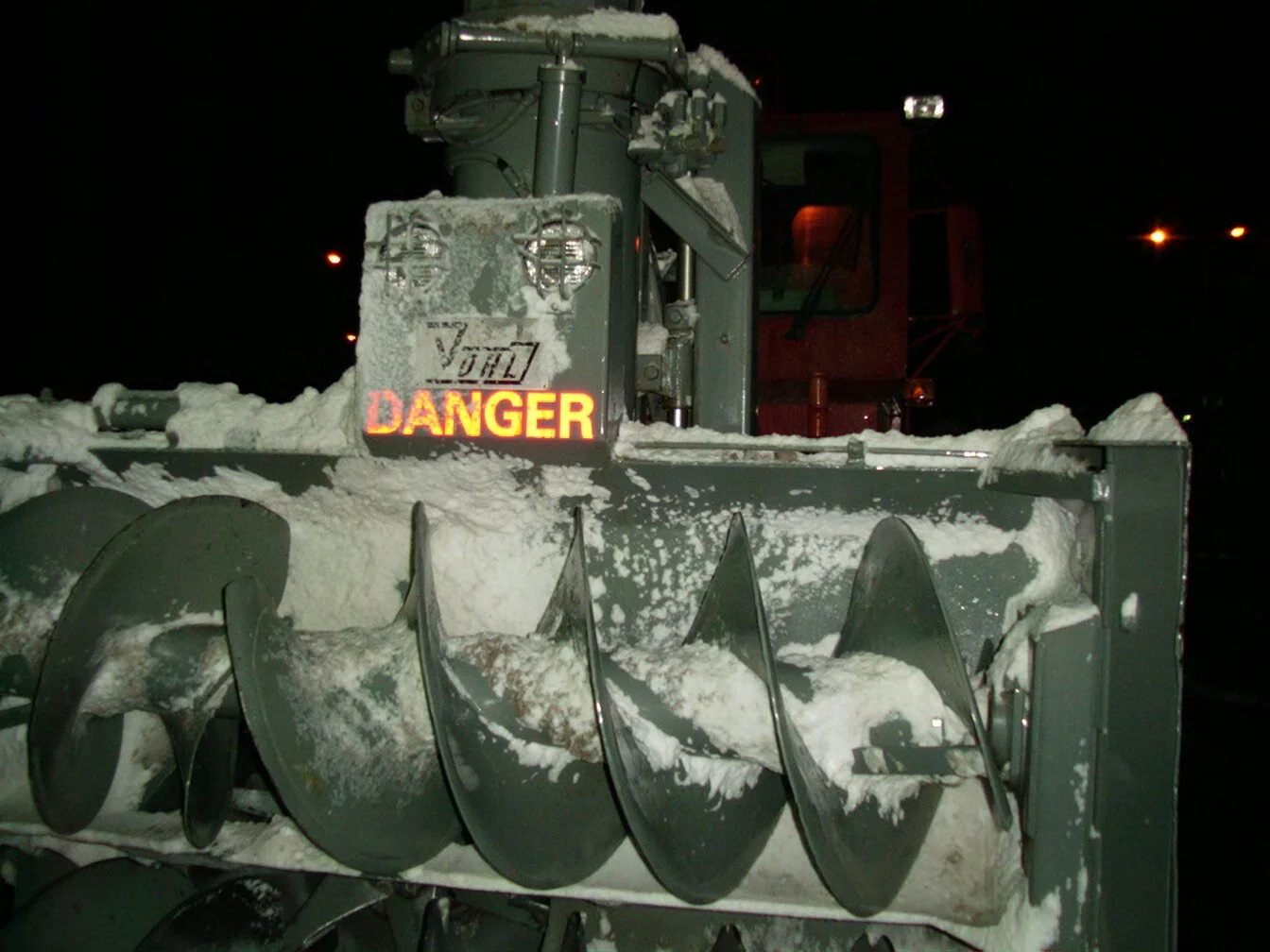

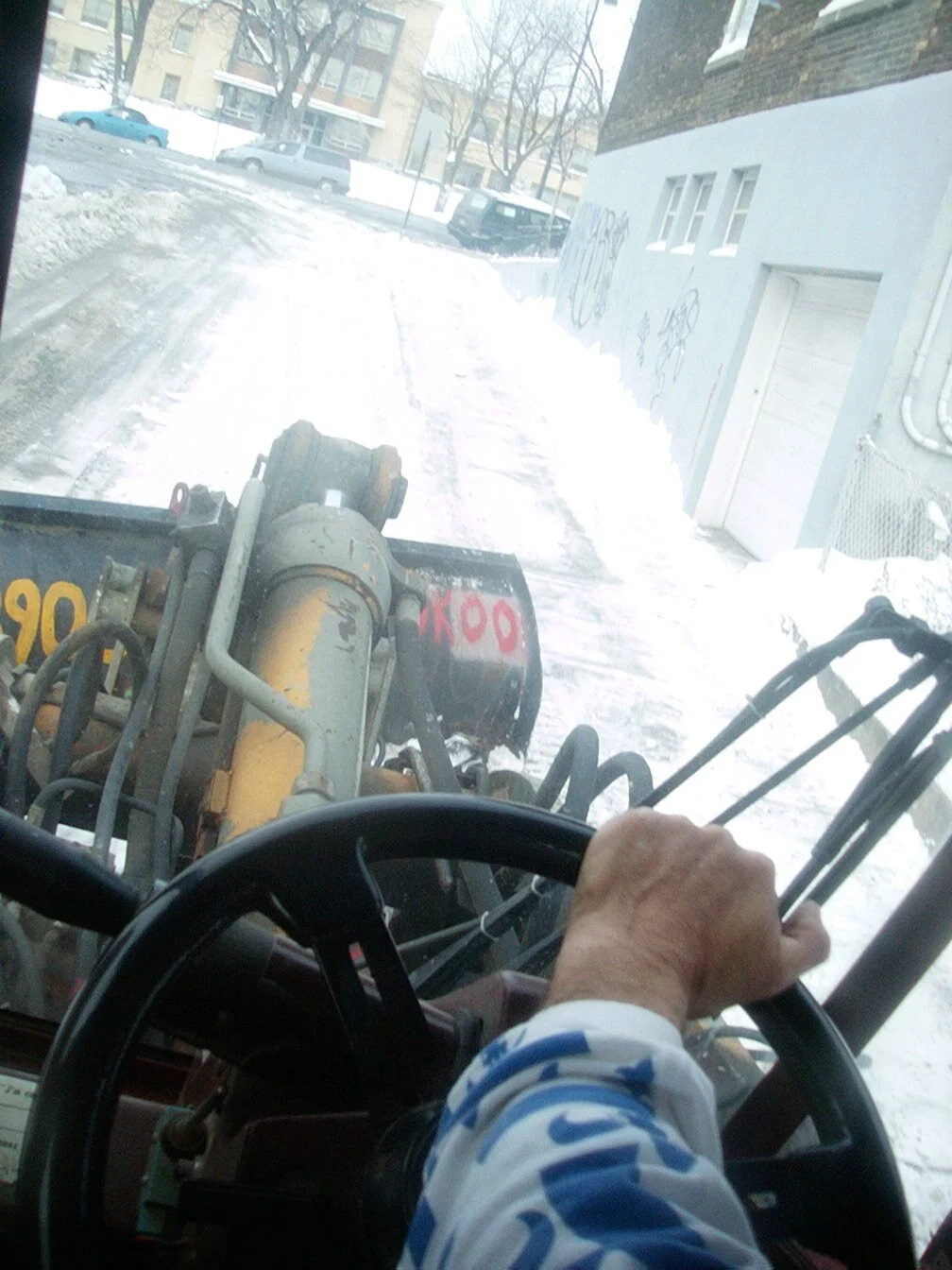

If I had crampons, I could go buy food. I could clomp over the ice-capped sidewalks between the towering hedges of petrified snow to the shop two blocks away—and not be one of the broken bone/cracked head casualties making Montreal scream with ambulance sirens and local hospitals run out of plaster casts.
Broken snow plows, broken water mains gushing instant ice...Siberian sidewalks...deserted polar-capped streets...cars smashed and piled into accidents or buried under avalanches... weather predictions of freezing rain turning to slush, changing to icebergs...Let me out of here!!!
With Montreal frozen solid under snow-removal budget cuts, it’s hard to remember exotic things like heat, light, tropical palms and flowers. Impossible to write about Malaysia’s steamy jungle or Portugal’s springtime isle of Madeira. All I can think of is ICE, ICE, ICE! And so I will write about ice. The unforgettable ice of Nunavik, Quebec’s vast Arctic region of the aurora borealis, northern lights.
I will write about my five-day, six-man/one woman guinea pig journalist’s igloo-building expedition to the land of permafrost and barren tundra north of the 55th parallel... To a village called Povungnituk [Po-vook-nee-took] on the edge of the frozen Hudson Bay on the Ungava Peninsula - 1,100 miles due north of Montreal, where 1,000 Inuits (once called Eskimos) live in 436 colorful boxy pre-fabs in a land without credit cards.
The anesthetizing daylight white of Quebec’s Far North
Montreal’s temporary blanket of white is nothing to the anesthetizing daylight white of the Far North. Details of my voyage there get easily swamped in this modern life blasted with shapes, details, images and sounds. But the meditative emptiness of that opalescent formless desert is something I will remember forever.
To look up and down and see nothing but white. To look around and around and see nothing but white. A formless white world where the mind, with nowhere to go, goes inside. After three days in that sense-calming vacuum, it was a shock to fly back to the south, to the horribly cluttered world of forms and colors. It’s perhaps the same shock we all experience the moment we’re thrust out of the womb to the startling world of the senses.


We flew from Montreal to the Quebec Arctic in late April, before the thaw and the melt, when the banished light returns and polar bears are ravenous... We flew over villages I couldn’t pronounce—Kuujjuarapik... Umiujaq... Inukjuak—over Nunavik’s countless frozen lakes, with the Povungnituk mountains and the mysterious crater of Pingualuit to the east --one of most spectacular meteor impact sites in the world—1.4 million years old, 876 feet deep, and 2 1/2 miles across.

We flew and flew, getting in and out of small Air Inuit planes wearing the bulky expedition outfits and felt-lined lunar boots (warm at -40 Celsius) that we’d struggled into at 5 a.m. in Montreal. Dragging our expedition sleeping bags and duffels stuffed with extra longjohns, wool socks, sweaters, ski goggles, binocs and non-electronic cameras—and rolls of toilet paper. (The check list on this $4,000.00 CN Inuit Adventures expedition advised us to bring our own. )
We flew and flew toward the northernmost tip of Quebec on the Hudson Strait, to land on an airstrip of crushed rock. We were just another gang of white-faced Quallunaat - non-Inuits- coming to the exotic Arctic with only a few words of Inuktitut. Our 24 -word Inuit Aventures glossary included nunakkujjuuq for snowmobile, siniktavik for hotel, nigivik for restaurant and immaha (which means both maybe and polar bear) and—was this a harbinger of things to come?—taima “It’s over” and aliasuppunga “I am happy.”
An airstrip of crushed rock
I was so eager to meet the people of this fascinating ephemeral culture who lived in dwellings that melted, wore animals skins that decayed back into the earth and amused themselves with invisible oral traditions of storytelling and singing. I knew I was in for an original experience — the purity of the air, the stunning silence, sensing the earth’s pulse as I slept.
The day after we landed we set off from Povungnituk for Camp Tuksukatuk 68 km away. Our expedition gear had been loaded onto kamatecs, wooden boxes nailed onto crude wooden rudders to function more or less like Arctic wheelbarrows for hauling goods. But today the goods to be hauled were US. Each of our Inuit guides drove a deafening snowmobile, and each snowmobile had a kamatek attached to it by ropes.
Each of us crawled into a kamatek and were dragged behind, banging and bumping over the bare rock, hard-packed snow and ice, and inhaling the snowmobile fumes—for three hours. The kamateks were like coffins: we each had our own coffin. As the only female in this twelve-man expedition, I got a coffin with walls and ceiling and tiny scratched plexiglass window. One advantage was that I couldn’t fall out, as did our jovial Quallunaat cook Denis, who had miraculously fallen asleep during our voyage, and while going over a bump, rolled out of the speeding kamatek and down a long snow bank—without splitting his cranium.
It takes 50-80 huge blocks of wind-packed dry snow to build an igloo six feet in diameter. We gathered around each of the Inuit guides as they marked off their territories and dug their knives into the permafrost to carve out blocks of snow. Watching the male journalists learning how to shave and shape the blocks, I waited for cues from my 30-year old guide Eli. He kept hacking at the snow, fitting the blocks together, checking the progress of the other guides, trying to outdo them in speed and style.
Feeling ignored, I finally asked him to show me something. He finally said, matter-of-factly, that women did not build igloos. But I had been promised—as Inuit Adventures had advertised—that I would be taught how to build an igloo. But would I leave the Quebec Arctic with the feeling that I’d learned more about igloo building when I was a kid in Indianapolis? When I was ten my friend Vicki and I had gathered up all the neighborhood turkey baking pans and packed them with snow to make bricks. Our igloo wasn’t exactly dome shaped, but building it had been a frozen-hands-on experience with basic principles of modular construction. Tourist would certainly feel cheated to pay $4,000CN to come all this way to learn that Inuit women did not build igloos! (By now male Inuit guides have been reprogrammed to instruct female tourists in this ancient Arctic art.)
My friend Roxanne Lajeunesse, who is as passionate about snow as some people are about Nouveau Beaujolais, had waxed ecstatic when I said I was going to Povungnituk to learn igloo building with the Inuits. Ah quelle silence! You’ll feel the pulse of the earth as you are sleeping. You’ll feel her breathe and vibrate. C’est vraiement cosmique! Cosmique? Cosmic? Was that what Roxanne had said? Or was it comique? Blackly comic.
The night after we landed, I found myself sleeping in an igloo a few hundred yards away from the Tuksukatuk base camp. Shivvering on a caribou skin spread over a mattress of ice, breathing air wet enough to gargle, and stifling a looming claustrophobia and bladder impulse. I was so tightly melded to the coughing man on my right, and the man snoring like a snowmobile at full throttle on my left, that I couldn’t have wiggled out of my polar expedition mummy bag to find the bucket of frozen piss if I’d wanted to.
So much for the romance of the Arctic and Nanook and all that. Yes, our lantern-lit igloos had glowed like fiery opals in the Arctic night. And it was amazing to watch the Inuit igloo masters with their ice knives, like proud Samuris with their swords, slice a home out of snow and furnish it with ice benches and tables and skins and propane lamps and portable stoves.
Not Nanook
As arduous and bumbled as my trip to the Arctic seemed at moments—wasting a whole day while our guides snowmobiled around looking for ice thin enough to drill into to go ice fishing; having a ridiculously short 15-minute dogsled ride over the tundra, during which my film ran out and I changed it bare-handed in time to photograph my sled dogs snag a kid’s bicycle and drag it in their ropes a mile over the ice— despite all of this — I feel grateful to have snatched glimpses of life in a harsh simple world.
I feel grateful to have brewed tea from ice, watched Arctic char freeze in mid-air as they were pulled out of the icy water, washed dishes with snow, ate caribou jerky, learned about frostbite, fogged lenses, and frozen batteries and observed the intimate Katadjaq throat singing ritual of Inuit women. Watching them standing mouth to mouth, using their throats as resonators to imitate mating geese, running rivers, and the hissing wind.
Taima It’s over - I could say. But I didn’t feel like saying Aliasuppunga—I am happy. I felt like staying for a while, forgetting the igloos and tours and just living as a Quallunaat in the village for a few months. To learn more about the fascinating Inuit, the People, who crossed over the Bering Straits from Asia over 9,000 years ago.####