
Adios Muchachas
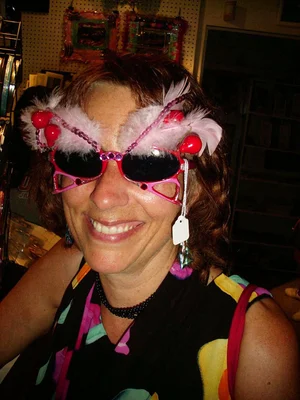
“In 1982 New York based GEO Magazine commissioned this story for their “Latitudes” section. They wanted a personal essay about the early influences that made me want to travel. They organized a photo shoot, taking me to a remote beach on Long Island, as a stand-in for Pie de la Cuesta in Acapulco. I wore the cactus-green cardigan that I had bought at a Mexican market for my father, which he never wore. I was stunned when the travel magazine I loved so much, a true story-driven writer’s magazine, bit the dust in 1982 and could not publish my piece. But here is the story 40 years after it was commissioned, and 57 years after it was lived. I wish I had all the photos that my mother Peig took on our trip, but she lost them on a Mexico City bus on the way to Chapultepec Gardens, and we never saw them again.”
¡Adios Muchachas!
Driving a Ford woody station wagon from Indianapolis to Acapulco in 1962, on old hairpin Mexican roads took guts or desperation. My mother had both.

1960’s motel has seen better days
We called it Indian-No-Place and snickered to think it could actually be the "Crossroads of America" like the radio announcers said. Indiana was a country for hogs and soybeans, and its capital was a “crossroads" only because you had to drive through it to get to someplace else. Indiana was flat, boring and lakeless, except for those muddy man-made things. But for the thrill of an occasional tornado, a summer in Naptown was a string of hot drippy listless afternoons that began with cars screeching at the Indy 500 Mile Race, and ended with pigs squealing at the Indiana State Fair.
That's how I saw Indianapolis when I was 13, and that's how my mother saw it too. I was a renegade cowgirl in a buckskin jacket who climbed trees, hated dolls and adored Nancy Drew mysteries. My mother was an artistic New Yorker who hated the living in the conservative Midwest and hated housework.
When all the Junior League mothers on North Delaware Street were ironing the smocking on little organdy dresses or making civic chit-chat over tea and Girl Scout cookies, our mom was building a theatrical stage for us in the basement, sewing us pirate costumes or gluing National Geographic Magazine photos onto plywood and cutting them up into educational puzzles with her jigsaw.
It was only natural that she should want to get away from Naptown for a summer. Perfectly reasonable that she should ask Dad for the Shell Motor card and an advance on her grocery money so she could drive me and my three sisters to Mexico. And given his obsession with his law practice, perfectly normal that he said yes.
Perfectly normal
If you wanted to go to Mexico and your husband liked to work and didn’t like to travel, you just left him behind. I was happy because my babysitting duties would be simplified. A carload of kids would be easier to keep track of than a houseful all scattered about. And Mom was relieved not to spend another summer driving us all back and forth to the “Rivi,” The Riviera Club swimming pool that had a posh-sounding name but was just a concrete park with screaming kids and boisterous teenagers. What would we do when we got to Mexico? With the thrill of escape racing through her veins, Peig Lyon hadn’t the slightest idea.
We must have caused a neighborhood scandal on that June morning in 1962. While the kids across our street were drawing hopscotch lines in chalk on the sidewalk Peig Lyon piled her four girls — ages 13, 10, 9 and 3— into the powder blue Ford Woody station wagon with enough jigsaw puzzles and Cheese Nips to make it to the Mexican border. She said Adios to her husband, pressed the pedal of that V-8 engine, and Vamos! took off — leaving the pallid moon on the Wabash River for a fiery tropical moon, the flat stubby Indiana cornfields for the Sierra Madres, and the muddy man-made puddles for the boiling Pacific.
Our escape from Indiana was a flat blur of cornfields, intersections, gas stations and restroom keys. Then somewhere near Bowling Green, Kentucky, Del Shannon was on the car radio, singing about our mother
My lit-tle runaway…Run-run-run-run run-away!

We were coming into Tennessee, that country of endless dry curly tobacco fields and old falling down barns plastered with CHEW—MAIL—POUCH signs. My grandaddy chewed Mailpouch tobacco and Daddy too sometimes, to show he was still a Tennessean. But I thought it was disgusting.
And here were all the The Burma Shave shaving cream roads signs. I knew them by heart from reciting them one after another on dozens of family trips to Grandaddy Lyon’s farm in bull’s Gap, Tennessee.
It wasn't until we started to see savannahs and swamps with spooky cedar knees sticking out of the slimy water and signs declaring NEGROES NOT SERVED HERE that I could really believe we were in the Deep South and this wasn't just another trip to East Tennessee.
I perked up to my duties as co-pilot to read maps, figure mileage and try to keep Peg awake switching the radio stations. Life in the back seat was simpler for my little sisters who seemed happy to be going nowhere in a snug nest of pillows and blankets, candy wrappers and peanut shells. Our blue wagon hummed and rolled over the world.
Always getting lost

Spooky Louisianna graveyards
My mother hated maps, so we were always stopping to ask for directions. Every so often Peg stopped to ask for directions and forage for provisions—Cokes, Cracker Jacks, maps, Chamber of Commerce brochures and cans of Sterno to cook our TV dinners. If we got lost on one of these diversions, if I read a map upside down and we missed an exit and went a few hundred miles out of our way, then so what. Anywhere was somewhere else and might be an adventure.
We fired our guns and we began a-runnin’ down the Mississippi to that sweltering Gulf of Mexico. I was singing along with Johnny Horton as we pressed onward to New Orleans. There we went swimming in Lake Pontchartrain the day before it was declared polluted and shut down. We spent a gloomy afternoon exploring an old graveyard reading mossy tombstones, until lightning flashed behind a huge mausoleum with stag antlers and made us run in fright. My sister Pat, a budding entomologist, loved it though, scampering around to capture praying mantises and skittering chameleons to keep in our car as pets.

The mountains of Tennessee
I couldn’t wait to get to San Antonio, Texas to see the Alamo. I was all mooney over Davy Crockett, or rather Fess Parker, the handsome actor who fought so bravely for the Republic of Texas in the Walt Disney movie. This heroic Tennessee frontiersman and statesman — the King of the Wild Frontier who kilt him a b’ar when he was only three —was born in my daddy’s neck of the woods.
On one of our family trips to Bull’s Gap, Tennessee, Dad bought me a coonskin cap to go with my buckskin jacket and took me to see Davy’s birthplace. But when we finally made it to old San Antone with Mom, the real Alamo looked smaller than it did on TV.
I didn't want to believe Davy was really dead. The movie showed Fess heroically fighting till the credits came on. But after reading the plaques about 1836 attack on the Alamo that said Davy Crockett was felled by General Antonio Lopez de Santa Anna’s Mexican soldiers, I realized Fess was dead. I stood in front of the old mission and sang every verse of the ballad I could remember.
Endless smoldering highway
Texas rolled on and on in a big boring heat wave. After the excitement of seeing my first tumbleweed and first cowboy hat, Texas became an endless smouldering highway. We rolled down all the windows and I sat for hundreds of miles with my feet stuck in a plastic tub of ice water, chattering to Mom so she wouldn’t sink into a heat trance. Then somewhere past Cotulla, she shook me awake. Something on the radio sounded like a gargling match. It was loud excited voices erupting in Spanish. Ye gods! How will we ever communicate with them? she cried. Our five hearts pounded as the border advanced.
Crossing the Mexican border

Giant Saguaro cactus
All I knew of Mexico was from Hopalong Cassidy movies, so when we crossed the Rio Grande I expected some kind of excitement. But Laredo on a Sunday morning was a ghost town. The sleepy looking border guard looked dully at our tourist cards, stared at the mess in our car and waved us on.
Suddenly pedestrians were peatones, the hit tune Never on Sunday which had followed us all the way from Indiana, was now Nunca en Domingo with trumpets and brass and Bebe Coca Cola! signs were everywhere.
Like a cowboy movie set, dry and dusty Nuevo Laredo had rutted streets, goats and boney dogs, burros piled with bananas and fat whiskery men in wilting sombreros. We tanked up with Pemex gasolina and hit the open road.

Dry, spiky and mean desert cacti
If Texas put us to sleep, Mexico kept us on the edge of our seats. The Sierra Madres had real hairpin curves and there was always a gaily-painted semi-truck snorting behind us or wheezing in front. Every curva peligrosa had a gory crucifix splattered with red paint to commemorate the travelers killed there.
My sisters and I hung out the windows sniffing the tarry creosote and gaping at the purples, greens and blues layering the vast horizon. The cacti looked spiky and mean, and I knew there were tarantulas and scorpions lurking in the dust beyond our car. Vultures drifted hungrily in the yellow sky and I was glad to be away from Indianapolis.

It was a pretty extravagant thing to do, to pick our motels by the looks of their swimming pools, but Mom’s household allowance of $400 a month turned into a big wad of 20,000 pesos made us feel rich. We stopped early in the day to loll by the glittering pools of the Motel Cactus, the Motel La Siesta, the Motel Maguey, pretending to be rich actresses on holiday, while Mom cooked our TV dinners two at a time in our portable Sterno oven. Then at the Motel Tuna in San Luis Potosi I got a thundering earache. The polluted Lake Pontchartrain microbes had landed.
The owner of the Motel Tuna found us a translator—and the next moment we were knocking on the door of what looked like a prison. The heavy door groaned open and a Mexican woman reeking of Tabu and wearing jangly pineapple earrings stepped from behind the thick high wall hiding her beautiful house. We stepped into a tropical courtyard paradise with singing parrots and flowering vines.
The translator went with us to the hospital and explained my problem to a nurse. After the doctor’s grave sounding words in Spanish, the only other words the pineapple lady spoke to me, after the doctor took his picador and lanced my eardrum and I stopped shrieking and wailing were: Theese may hurt. From there on I studied our Spanish phrase book in earnest.
On the way to Quéretaro we saw a car with Ohio plates pulled off the road and stopped to offer aid. It turned out the occupants were missionaries from Moundsville, Ohio. They were on their way back to Mexico City to move from a trailer into a new house and were only setting up for a picnic. Before the mayo was spread on the bologna, they gave us the address of the Buena Vista Trailer Court in Mexico City and invited us to use their vacant trailer for the summer.
Mexico City!
We should have stopped before dark to look for a motel, but Mom kept going. The lights of Mexico City kept getting closer and I think she was losing her nerve. While we were gassing up at a Pemex station, a stringy, greasy young man in a flowered shirt walked over to us. “Ignacio” he said, pointing to himself and then to his rusty old broken down car. We had no reason to trust him, but we needed to trust him. Mom took the hammer she kept under the driver’s seat and put it in her purse. A hammer in a land of switchblades and pistols! C’mon Mom, would you ever really have the nerve to bash anyone’s skull?
So that’s how Ignacio took over our station wagon. He was great at rounding hairpin turns while talking with his hands. He sang Mexican pop songs in a high wispy voice that made us laugh. We all cheered when he banked a wild curve and there before us was his glittering hometown, Mexico City. He drove us through the honking, blinding lava flow of traffic to a nice modest hotel, where he jumped out shouting us a big "Gracias" and waving "Adios muchachas! "
Montezuma’s Revenge
On our first morning in Mexico City, while my sisters and I stayed in bed sleeping off our altitude dizziness, Mom went exploring. She returned with the most wondrous things—tiny bananas the size of our fingers, powdery flakey pastries and odd fruit with stringy flesh. We had a fine picnic on the bed covers, but shortly after that Mom was hit with Montezuma's Revenge—altitude sickness, with a dash of Turista.
She turned so pale and I got scared but tried not to show it. She wailed that it was her punishment for being a wayward mother and for bringing us so far away from home. In the night she awoke dizzy and breathless from nightmares, and called to me like a little a girl. I crawled over my sleeping sisters to comfort her. How would we ever get back home to Indianapolis, she sobbed. What if the Cuban Crisis blew up into World War III?
It occurred to me that she was right, that it was a crazy thing to travel like this. Anybody else would have gone camping at Turkey Run State Park, and brought their husband. With a dose of Entero Vioformo and a chance to acclimate to Mexico City’s altitude of 7,349 feet, Mom was her old self, and we somehow found our way to the suburbs of Mexico City and the Buena Vista Trailer Court .
Our tin can
I always had a secret scorn for people who lived in trailers—tornado magnets—and who couldn't afford a real house. Trailers were flimsy tin cans with chintzy windows. I had a morbid wonder of what would happen to them in a tornado—whirling them through the Midwestern sky in a funnel cloud and scattering them like toothpicks. But here we were setting up house in a painted pink Winnebago.
Compared to our station wagon, we had a lot more room. But it rained in Mexico City every morning, and the novelty of trailer life started to wear off when we were stuck inside. The table of our trailer converted into a bed and we had to convert the bed back into a table before we could eat. We took our time over breakfast, with bowls of sweet Mexican hot chocolate spiced with pepper and cinnamon and lots of pastry until the rain stopped.
Mom made sure we saw all the cultural attractions of Mexico's great capital city, including the 22-ton Tiffany glass curtain depicting Mexican volcanoes at the Palacio de Belles Arts. On afternoons when we didn’t take a picnic to Chapultepek Park, or go to a museum or market or exhibition of native dancing or for a hamburger at Sanborn's, Mom took a long siesta, I studied our Mexico travel guidebook and learned to pronounce Popocatapetl. Pat chased the long tailed pistachio-ice-cream-coloured Luna moths, and Susie and Jan visited the family that lived in the wall.
The wall around the Buena Vista trailer park was five feet thick with broken bottles cemented into the top of it to keep out bandits. Near the entrance gate, the wall was hollow and a whole Indian family lived inside, in a windowless room with a dirt floor. The mother pressed clothes for the Buena Vista residents with an old iron she heated over coals. The father peddled hand-carved wooden marionettes outside the entrance gate. And the seven barefoot children ran around hounded by flies.
The mother was always smiling, even in the sweaty dark of their little cement room. One day she showed Susie and Jan how the saber-like tip of the thick maguey leaf could be used as a needle and thread. She broke off the tough thorny tip of the cactus, and trailing behind it was a long stringy fiber she could use to patch her husband's pants.
My sisters loved watching her make tortillas, slapping the lumps of dough on a rock and whirling them into the air. One afternoon they brought me one crowned with a wrinkled thing that looked like a black olive. I popped it into my mouth. Caramba! It was a hot tamale! I stuck my smouldering mouth under the faucet of our trailer, but it was hot and dry. My sisters giggled as I gasped and thrashed. They had been eating those things, like natives. Like a good fireman, Peg ran for bottled water.

Maguey plant
The earthquake
One morning Susie came back from spending the night in the wall and showed us the magic pink onyx beads around her neck. Sleeping in our tin can, we somehow didn't feel the earthquake, but sleeping in the wall with the Mexican family, she did.
In the middle of the night the metal bed frame started shaking, and her little friend dropped down to the dirt floor and set to muttering her prayers in Spanish, terrified at the earthquake tremors. Susie got down on her knees beside her and the little girl gave her a set of rosary beads. Susie thought they were magic because the bed stopped shaking.
Homesick for America
One night we got homesick for America and went to a Gary Cooper western at a drive-in theatre to hear some English for a change. Cowboy movies were silly enough, but this one was even sillier with dubbed Spanish that didn't fit the actors' mouths and a live soundtrack of Mexican horns and whistles from the rowdy crowds perched on the fence and nearby rooftops for a free show.
Just as the movie bad guys were winning, it started pouring and Peg said we had to remove the electric speaker from our car so the lightning wouldn't strike it. But we kept nagging at her to stay, even though the windshield was just a big watery blur, and in the confusion of hollers and boos and soaked Mexicans running for cover, we drove off with a big crunch as Gary Cooper fired at the hombres and the drive-in movie speaker ripped the window out of our car.
Gored matador
Another day we went to a bullfight, and it was just our luck to see a matador get gored. The bull hooked him in the stomach and tossed him in the air like a sack of hog feed. A hush fell over the mob but I could tell they were really enjoying it, like the crowds at the Indy 500 races who secretly hope for a crash to make their day worthwhile. We mourned the matador for days—he was so young and handsome—until we saw his picture in the newspaper with the news that he had lived.
The gore of the bullfight made me sick, yet I was fascinated by the Aztecs and their gory human sacrifices. Their monster goddess Coatlicue was something to admire, with her face of rattlesnake fangs, her navel bulging with human skulls and her huge breasts bloody with the hearts of sacrificed victims. According to Aztec legend, the place where the gods had gathered to plan the Creation of the World was only 28 miles from our trailer court: Teotihuacán.
Climbing the sacred Pyramid of the Sun
The only pyramid I'd ever seen was the Indianapolis Circle Tower Building, the fake Babylonian ziggurat where my father had his law office. Now towering before us was the ancient Pyramid of the Sun of the Plumed Serpent god Quetzacóatl. The guidebooks said the colossal pyramid - rising to the clouds - was over 2,000 years old and 215 feet - 20 stories! - high.
A station wagon with Indiana plates looked very strange in such a sacred place, but through our windshield we could see some tiny dots of people moving slowly over the top of the pyramid. I walked through the heat in a trance. When Patty and Susie saw me heading off to the pyramid base, they scrambled along, leaving Peig clutching little Jan—a three-year-old would never make it to the top.


Through the yellow powdery air my sisters inched up the narrow broken steps, holding hands, hunching over the crumbly rock. The broken stoney steps of the pyramid were barely the width of our tennis shoes. One slip and it would be a quick tumble to a split skull. My sisters and I climbed sideways, hunched over and hugging the crumbly rock. We didn't look down to the vast plain receding below. We didn't look up to the empty sky.
We kept climbing through the strange powdery air, until the Pyramid of the Moon at the far end of the Street of the Dead seemed miles below. Then the ledges vanished. There was only a huge mound of loose stones, and crawled on our bellies to make it to that place where the priests with obsidian knives had ripped the still beating hearts from their victims.
From the top, dazed by the eerie clarity of that Mexican sky, I imagined the ghost of that ancient city, with thousands of dark men adorned in Quetzal feathers carrying fiery torches, while the ceremonial drums beat louder and faster and the victim's heart pounded out of his chest — until someone who had been climbing above us flicked a glowing cigarette butt and it bounced off the stones and past my face into the hot wind.
Off to Acapulco
Our guidebook called Acapulco a “glamorous jet-set playground,” a “real hot spot” and it didn't really sound like the sort of place a mother and daughters should go to. But one day while we were admiring Diego Rivera's bright mosaic murals of Mexican revolutionaries on the University of Mexico campus, we met an American named Barbara. Barbara was looking for a ride to Acapulco, and we were getting pretty sick of trailer life, always finding tomato skins in the bedclothes…
On the road to Acapulco, we spotted a gang of skinny grinning boys waving some horrible lizardy things by their scaly tails.
“Uggh! What are those?” I yelped

“Iguanas," said Barbara. "They eat ‘em like chickens around here.”
Barbara looked like she ate iguanas. Her flesh jiggled and her eyelids were a kind of lizardy green. She never smiled and her short dry hair looked like it came off a coconut shell. I wondered why she didn't like America, or had to leave it. And most of all I wondered why she had no suitcase, and what could be inside the woven cactus bag she was clutching. She knew about the seamy side of Mexico.
She talked about cockfights and drinking Tequila in those cantinas where loud men knocked each other over the tables. But she was helpful with driving and directions, and we left it at that. We landed in Acapulco, and she took us straight to the Hotel Sans Souci. After that we never saw her again.
No sadness at The Sans Souci
The Sans Souci was truly “without sadness.” It perched on the side of a fragrant jungly cliff overhanging the gaudy Acapulco Bay on one side and La Roqueta Island and the boiling Pacific on the other. The lush hill side below hid thatched native huts and dry slithering things. We took a cheap airy bungalow with a hammock-slung veranda that overlooked all of it, and found Paradise.
Mornings we spent frying ourselves in smelly coconut oil at Caleta Beach and eyeballing hermit crabs as they peeked out from their sandy holes. We haggled with men peddling stuffed armadillos. A fisherman wearing a necklace of shark's teeth gave Pat a jar of sea life—tiny sea horses and porcupine fish—which she kept in a pan of sea water under her bed.
Afternoons we'd spend making the rounds of the big resort hotel pools, having a dip, sipping Cokes, looking for Liz Taylor and Richard Burton and other movie stars. At night the soft winds huffed against our bungalow screens, making the clinging geckoes cheep, and the waves shushed us to sleep. Sometimes a coconut fell with a comical whock! or creatures in the brush thrashed and screamed. One evening the sky turned the colour of avocado flesh. The moon eclipsed and the hills went red with native fires and drums. At dawn it was all ashes.
The Sans Souci was a beautiful old place, but like Barbara it was mysterious. It wasn't just how the moon shadows of the nodding palms crept across our beds at night. Or what we heard through the taco-thin walls. It had to do with the skinny woman with the painted purple lips and hair dyed the colour of rusty tin cans. One night we saw her slinked in the hammock of the Sans Souci patio—with a pistol in the pocket of her pink capri pants.
Torch-lit Acapulco nights
Those torch-lit Acapulco nights, with bronzed-god divers at La Quebrada plunging from the deadly-high cliffs, brought out something wild in all of us. Pat went from chasing pretty Luna moths to chasing five-foot iguanas with spikey whiplash tails and evil leathery eyes. Susie befriended a native girl who showed her how to slide down the liana vines to the cliff's sea-sprayed rocks. And little Jan fell madly in love with a young resort hotel owner named Carlos, who let her sing over the microphone with his hotel Mariachi band. Peig looked like a Mayan goddess now, her wonderful aquiline nose the colour of baked clay, and I felt restless and ached for romance.
Yes, Acapulco was a place for romance—not a place to be seen with your mother and sisters. Sex drenched the Acapulco nights. Who could ignore it? Movie posters promoting Lolita were all around, and in my fake tiger skin bathing suit, big sunglasses and unbleached hair Mexicans heard the name Lyon and took me for the 14-year-old vixen Sue Lyon, the actress in Stanley Kubrick’s scalding movie version of Nabokov’s novel Lolita.
My first date
One day when Mom went off to explore the market and I begged her to let me spend the afternoon at the El Presidente Hotel swimming pool. It was there that I met Armando. He was tall, dark and handsome. No oily beach boy or gigolo, I could tell by his respectful looks, and with my sunglasses on, I must have looked 16. Armando listened patiently to my patchy Spanish, as I tried to explain where Indiana as muy plata—very flat—and the Indiana 500 race cars as zoom zoom.
Armando called me muy simpatico. He said he was an abogado —a lawyer. I was crushed when his friends called him for lunch, but as he was leaving, he invited me to go with them later to see the famous sunset at Pie de la Cuesta.
“Ees fantastico!” he exclaimed, describing how the sun plopped into the ocean "like a beeeeeg eggg plopping into a frying pan." ”Su madre y su hermosas.. and he promised to get me back to the Sans Souci. And I thought, yes, yes, I'd be back at the Sans Souci before Mom even knew I was gone. Just in time to see Acapulco lights blink on in the bay. To stand on our bungalow balcony all rapt in the afterglow of what I would proudly call my first date.
Frankie and Mario sat in the back of his red jalopy, and Armando put me in the front seat beside him. For eight twisty hairpin miles, he zigged round and round the cliff tops, chasing the blazing ball before it sank into the Pacific. When we got to Pie de la Cuesta I was frightened by the monstrous waves. They were 20 feet high! With the rays of a mauve sun shooting through them, they filled and burst like gigantic luminous lungs. “Ees fantastico!” Armando shouted over the roar.
Deadly undertow
Armando, Mario and Frankie bounded into the surf. Not wanting to seem timid, I waded in after them. Did they know about the deadly undertow, and the risk of sharks, that I would read about later in the Fodor’s guidebook. I would never know, nor would I know why they let me go out so far…
All I remember is having my legs yanked out from under me and being sucked down into the dark. Churning and foaming like a rag doll in a Maytag. Being smacked hard and lifted up, and thrown close to shore. Standing up stunned, salt-blinded and trying to walk. Being dragged down by the waves again and coughed up, until I felt my arms being pulled off my body and the sand scraping my belly.
I should have been grateful to be alive. But I stood before Armando, Mario and Frankie, my handsome rescuers, all skinny and prickling with goose bumps, with sand in my teeth, my tangled hair, my burning nose, and a huge humiliating lump of it hanging down from the crotch of my new Jantzen fake tiger-skin bathing suit.
Midnight border drug raid
We finally made it back to Indianapolis, after crossing the Rio Grande at the Mexican-US border at Matamoros-Brownsville in the midst of a midnight drug raid. The border guards told us to stay at the border and spend the night there hiding under the covers in our station wagon, where we would be safe from the gunfire.
I helped Peg with the navigation all the way home, calling out directions right and left with my new Spanish as ¡Derecha! and ¡Izquierdo! When we landed in Naptown, I felt worldly and grown-up and ready to start high school. I felt proud riding up North Delaware Street and into our driveway in a station wagon all loaded down with Mexican pottery, piñatas, tin pineapples and rebozos, and the chartreuse green wool sweater we got for Dad at at the market in Cuernavaca. But the festive sweater knit by hand with nubby green wool, never fit him.
I was sad about leaving Mexico, and my heart ached for Armando so I wrote him a letter in Spanish. I picked the words one-by-one out of Cassell's Spanish dictionary, blissfully ignorant of such things as conjugation and syntax.
September 3, 1962
To desire Armando,
How to be your law to go? I to start to tall school and to be aroused. But we all sisters to get sad surprise when my father to leave my mother. I to have fear of to divorce.I to miss you very much, and to want to come back Mexico.
All my love, your Nancita