
When you land at Amsterdam’s Schiphol Airport, you land in a trench. At least it looks like a trench on the tourist brochure's diagram of the artificially-constructed lows and highs of the Dutch landscape, which range from 25 feet below sea level to a mere 25 feet above it. Schiphol is actually in a wide trough below sea level. Thank God it's a trough and not a structure built on pilings, like all the buildings in Amsterdam. In no other country in the world do so many people live below sea level.
Tattooed in Amsterdam
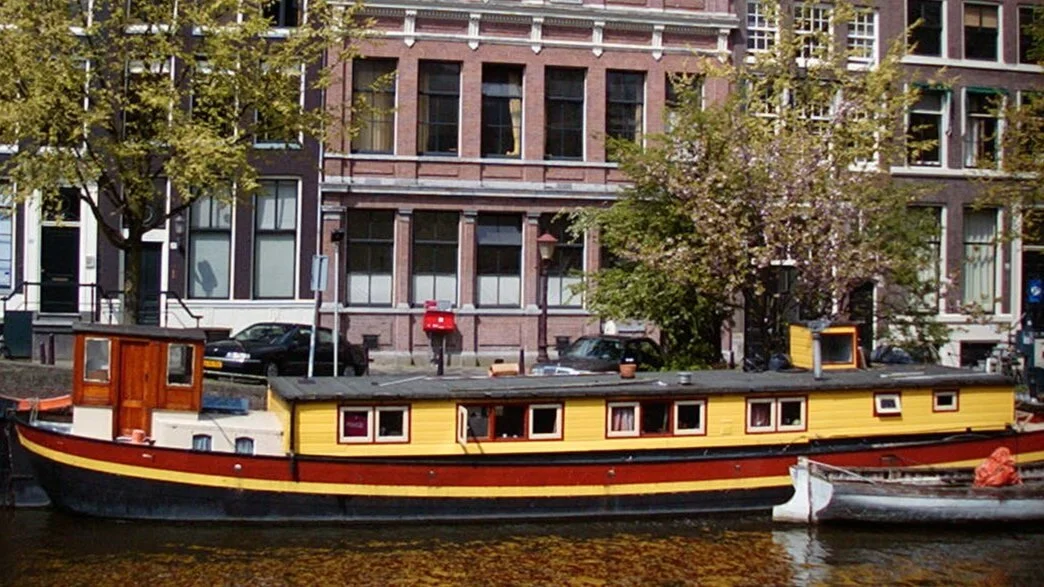
Dutch canal boat cruises a graat
The Dutch are proud of having reclaimed a whole country from the wild North Sea, building dikes, dams, sluices and windmills to keep the sea out, canals to keep the water in, and pilings to keep the massive brick townhouses from sinking into the antediluvian muck. In this tiny, tidy country (whose language contains eight different words for "tidy") 15.75 million souls crowd into 41,526 square kilometers, most of it in water, drained marshland and tulip bulbs.
For a small European capital (pop. 724,908; 145 nationalities) Amsterdam has a helluva reputation. Gabriel Garcia Marquez likened this hip seaport smelling of flowers and mind-bending herbs to a steamy South American metropole. It’s always been wildly tolerant, even though its origins seem innocent enough. Two Frisian fishermen and their dog ran aground at the conflux of the IJ and the Amstel around the year 1200 and decided to open a café. Then the discovery of a holy wafer found unburned in a furnace in 1345 brought floods of religious pilgrims.
Today’s pilgrims still keep coming, looking for other things to put in their mouths. Hard drugs peddled like pink balloons, soft ones smoked in cafés like De Oude Kerk , marked with the sign of a cannabis leaf, and chocolate. One-fifth of the world’s cocoa harvest passes through the Amsterdam docks!
Cannabis cafés
Cannabis seeds are sold as freely as tulip bulbs and joints are featured on the menus of certain cafés. Little wonder that such a cosmopolitan and liberal-minded city should have a housing shortage. Musing over this in 1933, Czech novelist Karel Capek admired the 17th century Dutch for having built "two towns at a single blow" —one on top and another below. With 165 canals ringing Amsterdam like a spider's web, one does see two towns—tall gabled brick houses sunk into the earth, and tall gabled brick houses reflected in the murky brown water of the graats, the canals.
There's a third town, reflected in my memory. It's the Amsterdam I knew in the 1980’s, when I sojourned in this adorably sinful port where Jacques Brel's sailors belched and sang to the whores. I was on a nine-week busking tear around Europe, plucking Irish jigs and reels on my home-made Medieval wire-strung harp. I was struck then, as I am now, to see a town with so many buskers. I saw some rather peculiar buskers, or pieces of buskers.
Buskers and bicycles
A statue of a musketeer at the entrance to a park suddenly came alive! He was standing on an emplastered pedestal, his body encrusted with plaster from the tip of his plumed cap to the tip of his boots. While mimes are often sneered at by louder more agressive buskers, this man portraying a figure from Dutch history was so original he could make a fortune just standing like a statue. On another street corner I saw a pile of fake armor. The busker who inhabited it had gone for a break. I tried to imagine the lone knight's performance. Singing? Standing on his head? Cartwheels? Then there was the ladder. The naked man who had been standing on it only moments before was missing.
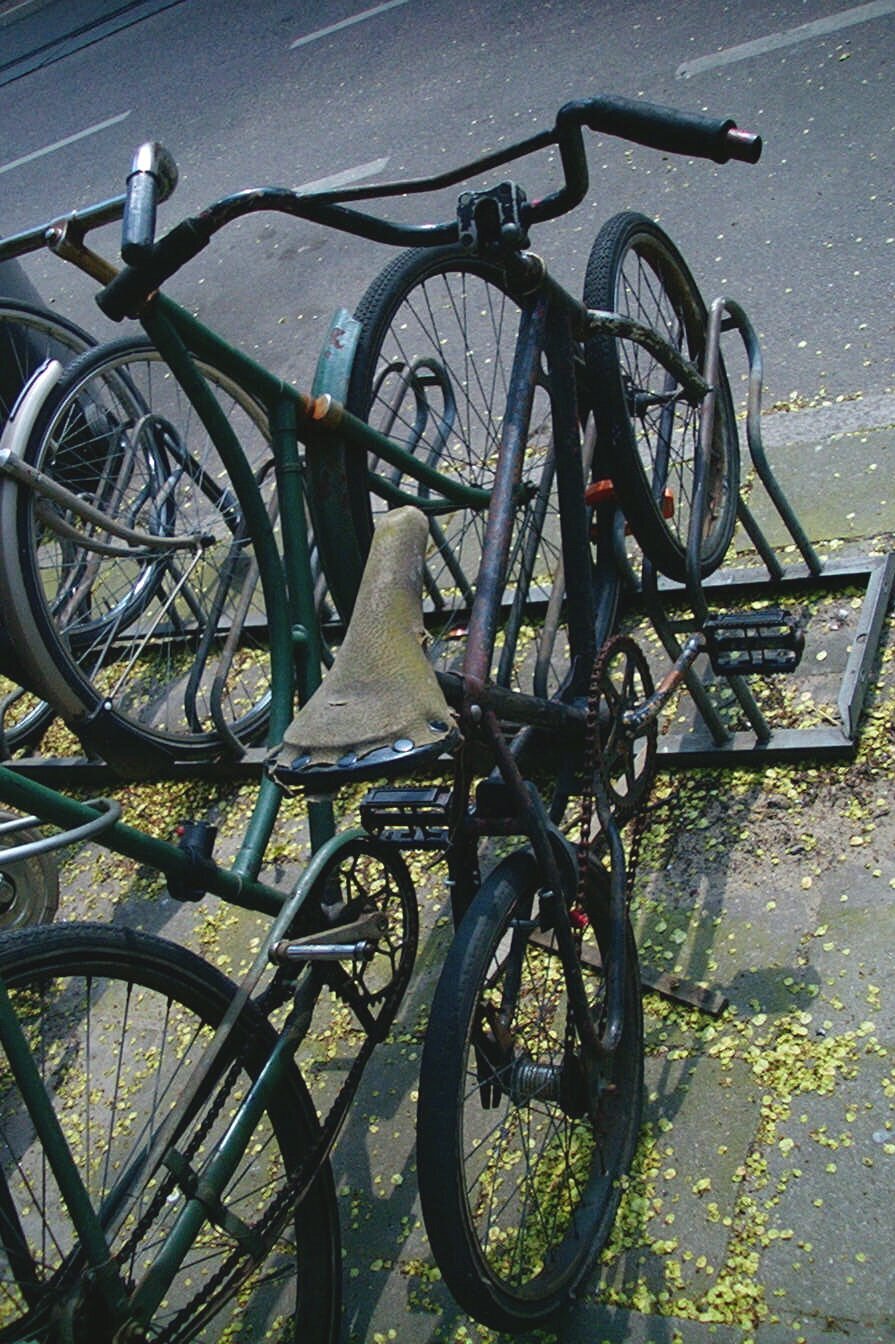
Amsterdam’s old black push bikes are the heaviest in the world.
And Amsterdam has so many bicycles! They teeter over canal boat riggings, dodder and rattle down the "fiestpads"—bike paths. The skeletons and disembodied parts of these big-boned old granddaddies with fat mudguards, back-pedal brakes and hard ornery seats—springs and innards, spokes and chains and seat stuffings—merrily litter the town, caught on clotheslines, perched in the treetops, stuck in sandboxes, and lined the bottom of canals.
On this return visit, it was reassuring to see all the old bikes still bumping around Amsterdam. But my nerves must have frayed over the years, or else I don't remember the whizzing convergence of buses, trams, cars, motorbikes, mopeds, pedestrians, joggers, dog-walkers and even horses, and the intense water traffic of canal boats, barges, salon boats and pedalos.
My sentimental journey
I'm embarking on a sentimental journey down the Amstel River and its maze of canals. At dusk, with the city lights blinking on, I climb into the small old 1910 cruising salon boat the Paradis, its oak and brass lovingly restored and shining, its table romantically set with cafe and friandises, flowers and glowing candles.
As we float past barges and colorful houseboats, under low arched bridges, scenes of present and past play on the movie screen of my mind. After zig-zagging through one canal after another, we glide past Amsterdam's oldest neighborhood De Walletjes—the Red Light district, the "busiest square kilometer in the Netherlands.”
From our boat, all we can see in the red-lit windows above the canal, are ghostly white bikinis floating under black lights. Last night I'd gaped close-up at the dreamily-lit goods in red neon windows, something I hadn't done on that busking trip. Gorgeous-figured Ladies of the Night—European, Asian, South American, black, brown, white—smiled, beckoned, flirted from their red neon shop windows, like shop girls luring you in to try on a hat. Amsterdam has 5,000 prostitutes, 70 brothels and "200 window prostitutes." The novelty of open, organized prostitution! In the lovely town of Haarlem, I'd been dumbfounded to see a neat brick brothel decked in flowers and red lights, adjacent to the Wallona English Church. ➤→➤→➤
In Haarlem it was the Bloemencorso (Flower Parade) from Noordwijk to Haarlem, a popular event with the locals. Excited Dutch voices boomed from loud speakers into the bleachers, and brass bands on bicycles and purple hyacinths shaped into gigantic cell phones and computer keyboards rolled by.
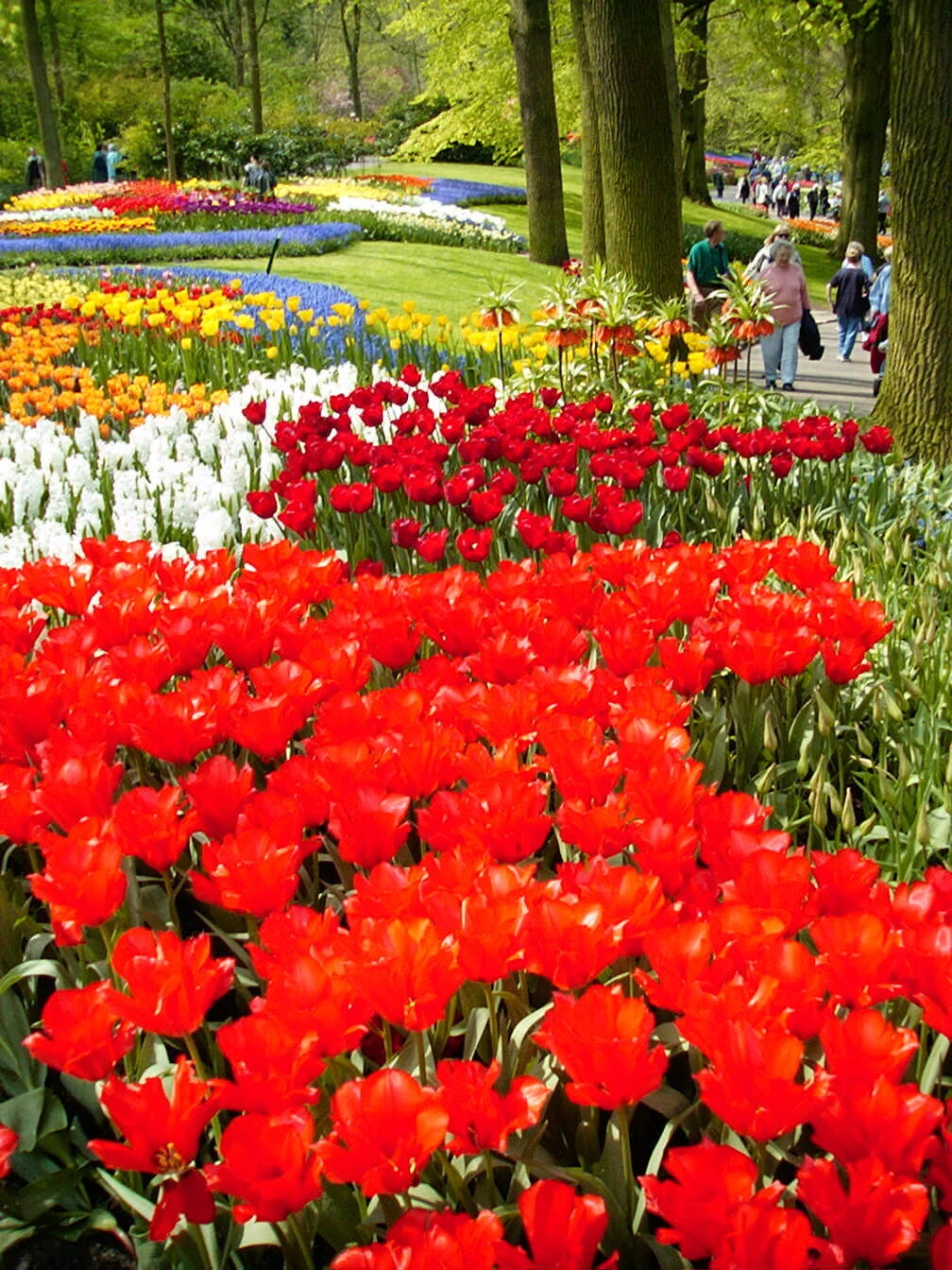
I'd cycled through miles of fiery red and dazzling yellow tulip fields between the sober seaside resort of Noordwijk and the fabled Keukenhof Gardens. A kinder universe of petals and stamens. In Aalsmeer, it was awesome to see the world's largest flower market, where 17 million flowers and 2 million plants from around the world are auctioned daily.
Cruising along, my mind flits like a bee from prostitutes to flowers. In the last few days, I'd seen billions. Yesterday I got to admire flowers of quite a different sort, etched with ink onto flesh. Amsterdam has 45 museums, the most famous being the Rijksmuseum, the Van Gogh and the Stedelijk Museum of Modern Art. There are others - eccentric, quirky ones devoted to Coffee mills, Chess, Cats, Pianolas, Pipes, Fans, Trams, the history of Torture, the history of Sex, the Dutch Police, Woonboots (houseboats), Soccer, Erotica, and Tattoo.
My pilgrimage to the most amazing tattoo museum in the world, in an old warehouse at 130 Oudezijds Achterburgwal, was only an excuse for a nostalgic day-long ramble about town.
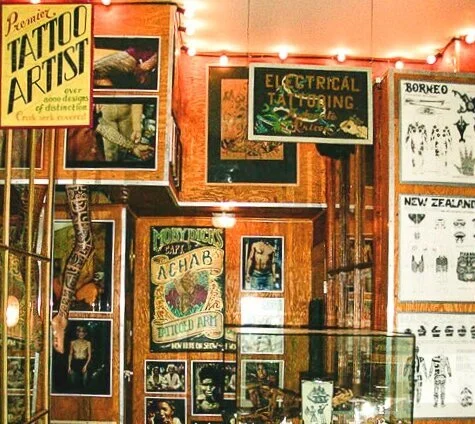
Henk Schiffmacher's International Tattoo Archive
I wandered over bridge after bridge, canal after canal, straat after straat, before entering the most fascinating antropological museum I've ever laid eyes on: Dutch tattoo artist Henk Schiffmacher's International Tattoo Archive. Confronting me were the tattooed spirals on a preserved tattooed head of a New Zealand Maori warrior. The Moko Mokai was a replica, but the tattooed mummy and the preserved tattooed arm of a drowned 19th century whaler was not.
To document the world history of tattooing, "Hanky Panky" has made tattoo expeditions into tropical rain forests, over mountain ranges, through white water rapids, and down dark alleys. Head hunters have made him an honorary chief, and cannibals have cooked him meals. (What sort I didn't ask ). But Schiffmacher's tribute to the world's oldest art form is anything but gory. Here are antique tattoo instruments from all over the world, old tattoo flash (designs), and vintage photos, a collection so vast that it provided the entire contents for the wonderful book 1000 Tattoos published in 1996 by Taschen Verlag.
I'd be stretching the truth to say I got tattooed in Amsterdam. But a virtual tattoo on the heart is indelible. Mine says: I love you, Amsterdam.


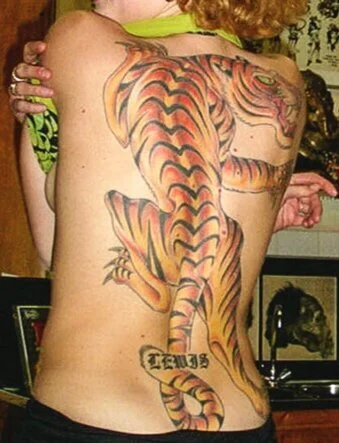
A freshly tattooed back - cost a lot and hurt a lot.